
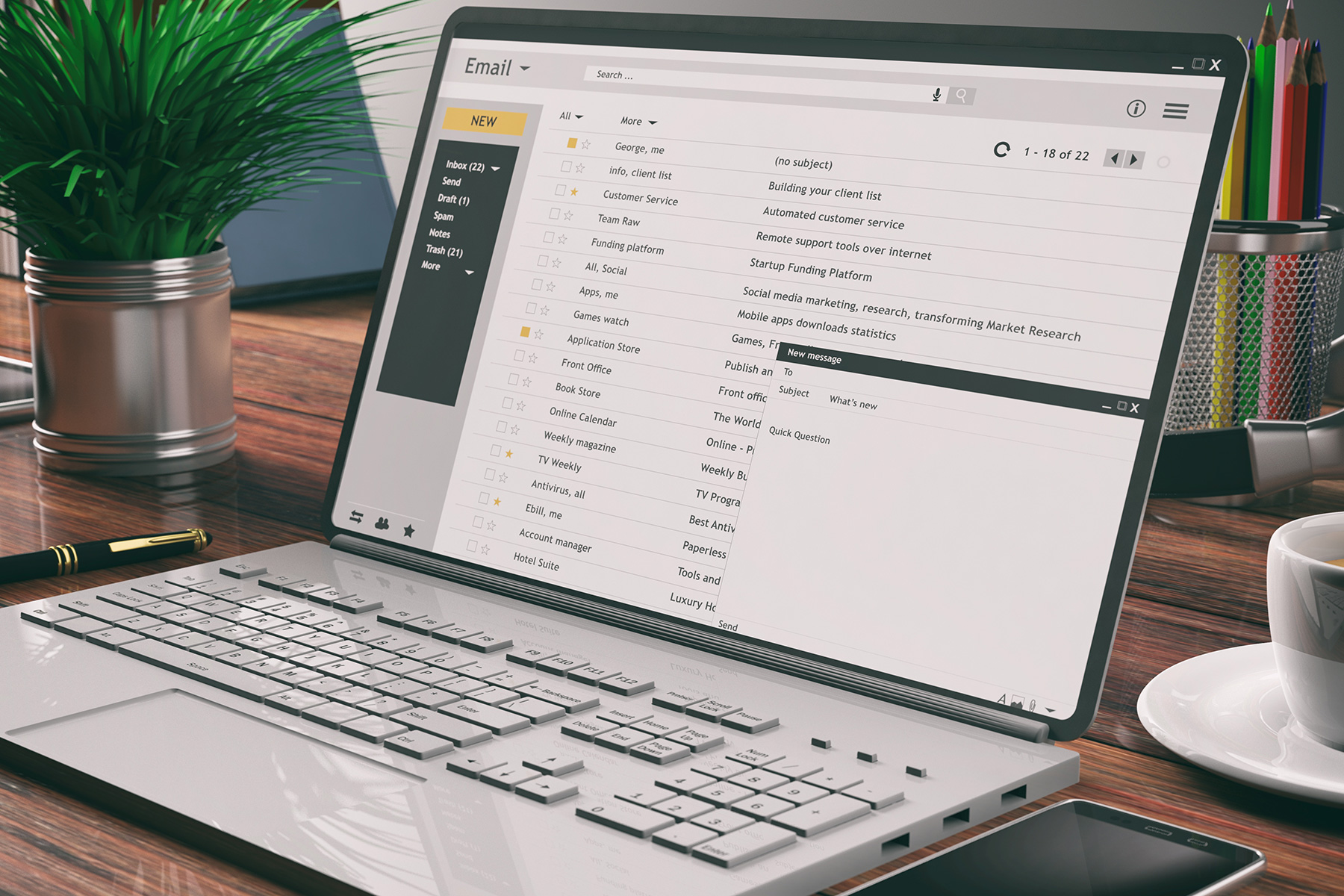
How to Send an Encrypted Email Safely

Encrypted email helps you keep sensitive messages out of the wrong hands. The good news is that sending an encrypted email safely does not need to be hard. You follow a few clear steps, choose the right method, and avoid a few common traps.

If you want a wider background first, you can read MailHippo’s guide to encrypted email. Then come back here for the “how to send it” part.

What an encrypted email send process looks like

When you send a normal email, your message often travels in readable form through several servers. Some links use basic protection, yet many systems on the path can still see the text.

When you send an encrypted email, the flow looks different. You still write a message and add files. Your email tool or secure portal then encrypts the content before it leaves your control. The body and protected attachments travel as scrambled data.

The recipient then opens the message in their inbox or through a secure web page. Their system uses a key, certificate, or passcode to decrypt the scrambled data. Only approved readers can see the clear version.

What you need before you begin

An email service or app with encryption support

Start by confirming that your primary email service supports encryption. That might be Outlook with Microsoft 365, Gmail with Google Workspace, a hosted business email, or a secure email portal.

Many business platforms already include content encryption features. They often appear as a padlock icon, a “protect” button, or a label such as “confidential”. A secure portal may encrypt everything by default when you send from inside it.

If your current tool has no clear option for protected sending, you may need a secure email add-on or a separate secure message service.

The right recipient address

Encrypted or not, an email still needs the right address. One wrong letter can send a private report to a stranger. Auto-complete can also pick the wrong contact with a similar name.

Check the To, Cc, and Bcc lines carefully, especially for first-time messages. When handling health, legal, or financial details, consider confirming new addresses with a short, plain test note before sending real data.

A clean address list is one of the simplest safety wins you can get.

A plan for attachments and access

Decide how you will protect attachments and how recipients will gain access. Many tools encrypt attachments together with the message body. Some keep files in a secure portal and send access links instead.

Think about your typical recipients. Staff at your company may open messages in their inboxes. Patients and clients may prefer a secure web page with a simple passcode.

For very sensitive files, you may want both message encryption and file-level protection. MailHippo’s article on how to send encrypted files by email explains that side in more depth.

Main ways to send an encrypted email

Built-in protected sending

Many business email services include built-in protected sending. In Outlook or Gmail, you often see a padlock icon or a menu item that lets you mark a message as encrypted or protected.

From your side, you stay in the normal compose window. You click the secure option and send. The platform encrypts the body and supported attachments behind the scenes.

From the reader’s side, the email may open directly in their inbox, or it may show a button that opens a secure web view. The platform chooses the right path based on the recipient and their setup.

Secure message portals

Secure portals move the full message into a protected website. The email in the inbox is only a notice. It has a short line and a button labeled “Read secure message”.

You write the email either in the portal or through an add-in. When you send, the portal stores the message and sends the notice. The private text never sits as plain content in a normal email.

Recipients click the link, sign in or enter a passcode, and read the message in the browser. This style works well when your recipients use many different email providers.

PGP-based sending

PGP uses public and private keys for each person. You use the recipient’s public key to encrypt the email. They use their private key to read it.

Raw PGP requires extra software or browser add-ons. It suits power users and small technical teams. Non-technical staff often find it complex to use on their own.

Some secure email services hide PGP behind a simple interface. Staff sees a secure send button. The system handles keys in the background.

S‑MIME-based sending.

S‑MIME uses digital certificates to link keys to people or roles. Outlook and Apple Mail both support S‑MIME. Many firms and health networks already use it.

Your IT team or provider installs certificates on staff devices. Once active, staff can tick a box or click a small icon to encrypt a message for any contact whose certificate they hold.

S‑MIME fits best inside managed business email, where devices and accounts follow company rules.

Password-protected files sent by email

You can protect content by locking the file rather than the message. You send a password-protected PDF, Office file, or ZIP file by email. The body can stay simple.

The recipient opens the email, saves the file, and enters the password to open it. This gives some protection even when the email service itself has weak encryption tools.

You still need to share the password in a separate channel, such as by phone or text. Never put the password in the same email as the file.

Step-by-step guide

Draft the message

Open a new message in your chosen email tool or secure portal. Add the recipient address and a short, neutral subject. Avoid putting names, diagnoses, or account numbers in the subject line.

Write the body of the message. Explain what you are sending and what action you need. Put any private details in the body, not in the subject.

Treat the body as the primary place where encryption works.

Add attachments

Attach the files that support your message. That might be lab reports, X‑rays, invoices, contracts, or forms. Attach all required files before you switch on encryption.

For very sensitive documents, you may want file-level locks as well. That can mean a password-protected PDF or a protected Office file. The MailHippo guide on sending secure documents via email explains those options.

Check that each file opens correctly on your own device before you send it.

Turn on encryption

Find the encryption or protection option in your email tool. In many apps, this appears as a padlock icon in the compose window. In a portal, it may be the default for all messages.

Click the option that marks the message as encrypted. If you see several levels, pick the one that clearly states content encryption. For example, “Encrypt” or “Encrypt and prevent forwarding”.

Make sure you turn on encryption before you click send. Some tools show a lock next to the subject once the setting is active.

Pick access settings

Some systems let you tune how people access the encrypted email. You might choose whether recipients can forward or print. You might set an expiry date for the web view. You might limit access to certain domains.

Pick the simplest settings that still meet your needs. For example, you might allow replies but block forwarding for health or legal topics.

If you are unsure which options to pick, start with the defaults, then adjust them after testing with a colleague.

Review the subject line.

Take a fresh look at the subject. Many encrypted email tools do not hide this line. Inboxes and logs often show it in plain text.

Strip out any private detail. A subject such as “Your recent visit” or “Your statement” is safer than one that lists full names and medical or money details.

This small change keeps encryption focused on the parts it can truly protect.

Send the email

Do a final scan. Check the addresses, subject, body, and attachments. Confirm that the encryption or protection setting is still on. Then click send.

For a new setup, send yourself or a colleague a test message first. See how long it takes to arrive and what the view looks like on both desktop and mobile.

How the recipient reads the message

Reading inside the inbox

In some setups, recipients read encrypted email right inside their inbox. The email opens like a normal message, with a small bar or lock icon that shows it is protected.

Their mail app uses stored keys or certificates to decrypt the content in the background. They may enter a passphrase once per session, then read secure messages with no extra clicks.

This style is common for staff inside the same company or health network.

Opening through a secure web page

For many outside recipients, the email in their inbox is only a notice. It has a short line and a button labeled “Read secure message”.

They click the button, and a secure web page opens. The page may ask them to create a password on first use, or it may send a one-time passcode by text or to another inbox.

Once they pass that check, the portal shows the full message and any attached files. They can often reply securely inside the portal, too.

Using a passcode, key, or certificate

Some setups use passcodes, keys, or certificates directly. The person may receive a one-time code by text that they enter into the web page. They may have a private key or smart card on their device.

These pieces act as proof that they are the right person. The system then uses them to unlock the encrypted content.

Explain this step in clear words when you first send secure mail to someone. A short line such as “You will receive a code by text to open this message” can reduce confusion.

How to send encrypted attachments the right way

When your email tool encrypts the whole message, attachments often gain the same protection. They travel and rest as scrambled data along with the body.

You can add a second layer by encrypting the files before you attach them. That can be a password-protected PDF, an Office file, or a ZIP file. The file stays protected even if someone moves it out of the email.

Share the password for such files through a different path. A text or short call works well. Do not reuse the same password across many documents.

If attachments are a big part of your work, the guide on sending encrypted files by email is a good next read.

How to send sensitive documents by email

Sensitive documents include full medical charts, legal drafts, payroll lists, and detailed statements. Before you send such items, ask whether email is the best channel.

If email still fits, use both message encryption and strong attachment protection. Keep the subject neutral—limit who receives the message. Set extra controls in your portal if the service supports expiry dates or view-only access.

For step-by-step help, see how to send secure documents via email. That article turns these ideas into a clear checklist.

Common problems and quick fixes

The recipient cannot open the message.

If the recipient cannot open the email, ask what they see. Do they get a broken link, a missing plugin warning, or a blank page?

For link issues, ask them to try a different browser or device. For plugin issues, move the thread to your secure portal view instead of decrypting it directly in the inbox.

If nothing works, send key details by phone and use a secure link for the document while you fix the email path.

Attachment access fails

Sometimes the message opens, but the file does not. The portal may block downloads. The file password may be wrong. The device may lack a viewer.

Confirm that the recipient uses a current PDF or Office viewer. Resend the file if you locked it with the wrong password. In portals, check that the file did not expire by design.

For repeated trouble, switch to a simple PDF with clear file-level protection and test again.

The message arrives without protection.

Now and then, a message that you thought was encrypted may arrive as plain text. That can happen if you forgot to click the lock or if a rule did not trigger as planned.

Open the sent message in your own folder. Check for the lock icon or banner. If it is missing, resend the message with encryption turned on and explain the mistake to the recipient.

If the icon appears, yet the recipient still sees plain text, ask your provider or IT team to review the logs and rules.

The sender used the wrong method.

A sender in your team might use plain email for a topic that needs more care. They might send a password in the same email as the file.

Treat this as a training moment, not a blame session. Show the safer method in a live screen share. Update any quick guides or templates that staff use.

Short, clear rules help. For example, “Use the secure portal for any file that holds patient or payroll data”.

Mistakes that weaken encrypted email

Sending passwords in the same message

If you lock a file and then write the password in the same email, you remove most of the value. Anyone who sees the email gets both the key and the lock.

Always send file passwords through a separate path. Use a text, a short call, or an in-person handover.

Putting private details in the subject line

Subjects often stay in plain text. Many systems show them on phone lock screens and in logs. A subject with full names and medical or money details can leak more than you plan.

Keep subjects short and bland. Let the encrypted body carry the real story.

Assuming all recipients use the same setup

Not every recipient has Outlook, the same version of Gmail, or the same portal. A method that works inside your company may fail for a client on an old webmail account.

When you pick a secure email tool, test it with a few real outside contacts. Adjust your method until non-technical users can open and reply with little help.

Forgetting mobile access

Many patients and staff read emails on phones first. A secure method that works only on full desktops will frustrate them and delay replies.

Test every secure send path on both phone and computer. Check how many taps and screens each method needs on a small device.

When to send an encrypted email

Send an encrypted email when a leak would cause real harm or stress. That includes health details, ID numbers, pay data, legal issues, and private client notes.

A simple rule helps. If you would not post the text on a notice board in your lobby, send it through an encrypted channel instead.

As you get used to this habit, choosing encryption will start to feel natural for the right kinds of messages.

When a secure link may be the better option

Some information should not live in any inbox, even in encrypted form. Master passwords, long-term keys, and deep system access details sit in this group.

In these cases, a secure link or a secret-sharing tool often works better—the secret lives in a special service. The email contains only a one-time link that can expire after use.

You gain tighter control over how long the data lives and how many copies exist.

Common questions

How do I send an encrypted email?

You write your message, attach files, turn on the encrypt or protect option in your tool, check the addresses and subject line, and then send. Your email platform or secure portal handles the actual encryption.

For a more detailed walkthrough, read “How to Encrypt an Email” step by step. That guide breaks the process into clear stages.

Can I send an encrypted email for free?

Many services already encrypt email in transit between servers at no extra cost. Some plans include content encryption features, too. Free tools exist for PGP and for basic file protection.

Free paths often need more setup and manual work. Paid secure email services usually add support and smoother flows. Start by checking what your current plan already offers.

Can an encrypted email be forwarded?

People can press forward on almost any message. When the email is encrypted, a forward may send only a link or a shell. New readers still need the right access to see the content.

If someone copies text from a decrypted view into a new plain email, that new email will not stay encrypted. Training can reduce that kind of slip.

Can I send encrypted files by email?

Yes. You can send files inside an encrypted email or lock the files themselves before attaching them. Both paths have value.

For full guidance, see how to send encrypted files and secure documents via email. Together, they cover safe file handling from start to finish.

Read next

If you want a deeper view of the full encryption flow, read how to encrypt an email step by step. It links your actions to what happens behind the scenes.

For file-heavy work such as reports and scans, learn how to send encrypted files by email. That guide focuses on documents.

To pull everything together for real-world documents, visit how to send secure documents via email. It shows how message protection and document handling work together.
Cisco Secure Email Encryption Service Explained for Recipients and Admins

cisco secure email encryption service guide featured image

[mh_key_takeaways]

Cisco Secure Email Encryption Service is the cloud backend that carries encrypted email for organizations running the Cisco Secure Email Gateway. It was previously branded Cisco Registered Envelope Service, and the CRES name still appears throughout the recipient interface and error messages.

The service is a genuine Cisco product, but its recipient experience is unusual enough to regularly trigger phishing reports. This article explains what the service does, how registration and login work, what the Incomplete Payload error means, and how healthcare senders use it for HIPAA-compliant transmission.

What Cisco Secure Email Encryption Service actually is

Cisco Secure Email Encryption Service is a cloud service that stores encrypted message content and serves it to authorized recipients through a web portal. It works with the Cisco Secure Email Gateway, which is Cisco outbound email security appliance formerly known as IronPort ESA.

When an outbound message at the gateway matches an encryption policy, the content is uploaded to the encryption service. The gateway delivers a Secure Envelope to the recipient. The envelope is an HTML file that displays a Read Message button and either attaches to the email or is embedded in the message body depending on the sender configuration.

The recipient opens the envelope, authenticates with a CRES account, and views the decrypted message on the Cisco encryption portal. The message content lives on Cisco infrastructure at res.cisco.com and does not enter the recipient inbox in plaintext form.

Cisco documentation refers to the service as CSEE or CRES depending on the vintage of the article. The two names describe the same service. The Cisco Registered Envelope Service documentation is the canonical technical reference.

cisco secure email encryption service in article illustration one

Recipient registration for a first-time envelope

The recipient side of the workflow starts when an encrypted envelope arrives at an email address for the first time. The envelope contains a Register button because the recipient does not yet have a CRES account tied to that address.

The registration steps:

  • Open the envelope HTML attachment or click the Read Message link
  • Choose Register on the initial screen
  • Create a password of at least eight characters
  • Complete the security questions for account recovery
  • Confirm the account through a verification email if required
  • Return to the envelope and log in with the new credentials

Once the account exists, subsequent encrypted messages from any sender using CRES will authenticate against the same account. The recipient does not need a separate registration for each sender. Newer envelope versions support federated sign-in with Microsoft, Google, and Apple, which removes the password creation step for recipients who already use those identities.

Registration is free to the recipient. The sender organization licenses the service through the gateway subscription and covers the cost.

Logging in to the Cisco Secure Email Encryption portal

Recipients access the encryption portal in two ways. The first is through the envelope link in an encrypted message, which routes to res.cisco.com with a message-specific token. The second is direct login at res.cisco.com to view all previously received encrypted messages associated with the account.

The direct login is useful when the original envelope email is deleted or lost. The portal shows an inbox of encrypted messages the account has received, up to the retention window set by the sender. Messages that have expired at the sender level no longer appear.

Password reset is handled through the portal Forgot Password flow. The account security questions established at registration are the primary recovery mechanism. If the recovery questions cannot be answered, the account is effectively locked and a new registration is required, which will not restore access to messages sent to the previous account.

Session timeout for the portal is typically fifteen minutes of inactivity. Long messages read slowly can trigger a re-authentication prompt if the reader pauses.

[mh_example]

Whether the service is legitimate or a phishing attempt

Cisco Secure Email Encryption Service is a genuine Cisco product used by many enterprise senders. The recipient-side experience regularly triggers phishing suspicion because unsolicited HTML attachments and Read Message buttons pointing to unfamiliar domains are common phishing patterns.

Signals that confirm an envelope is a real Cisco service message:

  • The Read Message link resolves to res.cisco.com or a customer branded subdomain owned by Cisco
  • The envelope displays sender branding matching the actual sender organization
  • The registration flow does not request payment information at any stage
  • The sender email address matches an expected contact

Signals that suggest a phishing attempt impersonating Cisco:

  • The Read Message link resolves to a lookalike domain like res-cisco.com or ciscosecure.co
  • The envelope asks for credit card or bank account information
  • The sender address is unfamiliar and unexpected
  • The message urgency is high and asks for immediate action

When in doubt, contact the purported sender through a phone number or channel you already trust. Do not use contact information provided in the suspicious envelope itself.

cisco secure email encryption service in article illustration two

The Incomplete Payload error and how to resolve it

Incomplete Payload is the most common recipient error with Cisco Secure Email envelopes. The message appears when the envelope HTML content is truncated, missing, or not properly rendered by the client.

Common causes:

  • The recipient mail server stripped the HTML attachment for size or content policy reasons
  • The mail client blocked active HTML and did not preserve the full envelope
  • The download was interrupted or corrupted
  • A mobile client rendered the envelope preview but did not download the full payload

Resolution steps in order:

  • Ask the sender to resend the encrypted message
  • Open the resent message on a different device or client
  • Check spam folders and quarantine for the original envelope
  • Contact the recipient IT team to check whether HTML attachments are being stripped in transit
  • Ask the sender to switch to portal-only delivery rather than attachment delivery

Persistent Incomplete Payload errors across multiple resends usually indicate a systematic issue with the recipient mail environment reformatting the envelope. The sender should switch to portal notification delivery, which sends a smaller link-only email rather than a full HTML envelope attachment.

Sender-side configuration on the Cisco Secure Email Gateway

The gateway administrator configures encryption policies that determine which outbound messages route through Cisco Secure Email Encryption Service. Policies can match on recipient domain, subject line keywords, DLP scanner findings, or mail flow attributes.

A typical healthcare policy encrypts all outbound messages that a DLP scanner tags as containing PHI. The scanner looks for medical record numbers, ICD codes, patient names paired with dates of birth, and other regulated data patterns. Matching messages are encrypted before delivery without requiring the sender to make a per-message decision.

Envelope customization at the sender level covers logo, colors, and greeting text on the portal. Consistent branding reduces recipient phishing reports because the envelope visually matches other communications from the same sender. The branding is configured in the Cisco Secure Email Encryption Service admin console and applies to all envelopes from that sender.

Retention windows for encrypted messages at the portal are also sender-configurable. Common windows are 30, 60, or 90 days. Longer retention makes messages available to recipients for longer but increases the exposure window on unopened content.

[mh_protip]

Cost and licensing model

Cisco Secure Email Encryption Service is not sold as a standalone product to sending organizations. It is bundled with the Cisco Secure Email Gateway license at the Advanced Security or Premium tier. Pricing depends on mailbox count, email volume, and license tier.

Cisco does not publish list pricing publicly. Enterprise deals typically start at around thirty to forty dollars per mailbox per year at the Advanced tier and scale down at higher volumes. Real quotes require a conversation with Cisco or an authorized reseller.

The pricing model orients toward organizations with hundreds or thousands of mailboxes. A five-person medical practice would find the total cost of the gateway plus encryption to be significantly higher than a dedicated healthcare-focused email service. Sibling coverage on HIPAA secure email service options covers the alternatives at smaller scale.

Recipient use of the encryption service is always free regardless of the sender license. Recipients never see a payment prompt from a real Cisco envelope.

Alternatives at smaller scale

Cisco Secure Email Encryption Service works well for organizations that already run the Cisco gateway. For practices that do not have a Cisco gateway deployment, adopting one for encryption alone is disproportionate.

Smaller healthcare organizations typically use a dedicated HIPAA email service that combines encryption, BAA, and recipient portal in one product. A HIPAA-compliant secure email service that includes the BAA in the base plan, works with existing Gmail or Outlook accounts, and delivers to recipients through a simple portal covers the same use case without the gateway overhead. This mention concludes the product context for this article.

Microsoft Purview Message Encryption serves a similar role for organizations already on Microsoft 365 Business Premium or higher. Sibling coverage on Outlook secure email encryption covers that path.

The HHS Security Rule guidance and the HIPAA Journal reference materials support the compliance framing for any encryption service selection.

When Cisco Secure Email Encryption Service is the right fit

The service is the right fit for organizations already running the Cisco Secure Email Gateway who need encryption bundled with existing gateway features. Enterprise healthcare systems, large clinics, and hospital networks with Cisco email infrastructure fall in this category.

The service is a poor fit for organizations that do not already run a Cisco gateway. The gateway itself is a significant infrastructure and licensing investment that only pays off at enterprise scale, and dropping in the gateway solely for encryption is not economical.

For patient-facing communications, the Cisco envelope experience has a learning curve that produces support calls at the sender side. Practices sending frequently to consumer email addresses often see fewer patient support issues with a dedicated healthcare email service that has simpler recipient onboarding.

Related coverage of the broader category and alternatives is available at sibling articles Barracuda email encryption service and Outlook secure email encryption. For healthcare marketing context around email infrastructure and patient acquisition, see Redefine Web healthcare marketing hub and coverage of healthcare website security features.

[mh_faqs]

How to Send an Encrypted Email

Email runs most of your workday. You use it for appointment details, invoices, HR notes, lab reports, and more. Some of those messages should stay private for the sender and the recipient only.

Sending an encrypted email gives that extra layer of privacy. The message content is converted into protected data that only approved recipients can read. Mail servers still move the message, yet they cannot read the private parts.

If you want a broad overview before the steps, you can read the MailHippo guide on encrypted email. This article then shows how to send those messages in practice.

What does sending an encrypted email mean?

Sending an encrypted email means you send a message where the body and often the attachments travel in coded form. The text no longer sits in plain view on every mail server in the path. Only the sender and approved recipients can turn it back into readable text.

Your email program or secure portal does the hard work for you. It uses encryption tools behind the scenes when you click send. The other person sees a normal-looking message once they pass a simple access step.

For a deeper look at what happens to the content itself, you can read what an encrypted email is. That guide focuses on the message, while this one focuses on how you send it.

Before you send

Pick the email tool you will use

Start by choosing the main email tool for secure sending. Many teams use Outlook with Microsoft 365, Gmail with Google Workspace, or a hosted provider. Some use a dedicated secure email portal in addition to normal mail.

Knowing the main tool matters, since each one handles encryption differently. Some have a simple encrypt button. Others rely on add-ons or a web portal. A few offer no real content protection at all.

Write down which tools you and your staff use most during a normal week. That short list helps determine which parts of this article best fit your situation.

Check what the recipient can open.

Next, consider the people who will receive your encrypted email. Staff inside your own company often use the same platform that you do. Patients, clients, and partner firms may use many different systems.

Some methods work only when both sides use the same setup. For example, S‑MIME inside a health network. Other methods send a short-notice email with a link to a secure web page. Those work well even when the other person uses free webmail.

Picture your most common recipient types. If many users are external and use mixed tools, a simple, secure portal will usually provide the smoothest path.

Decide if files need their own protection.

Email often carries both text and files. The text might explain the case. The files might hold reports, X‑rays, or contracts. In many breaches, those files cause the biggest harm.

Decide whether you only need to encrypt the message body or whether attachments also need extra locks. Many secure email tools protect files as well as the text. File-level encryption then adds a layer of protection.

If you know that attachments matter in your work, plan for both layers. The MailHippo guide on how to encrypt an email explains those layers in more detail.

Ways to send an encrypted email

Built-in email encryption

Many business email platforms now include some content protection. In Outlook or Gmail, you can often click a lock icon or choose a protect option. The service then encrypts the body and attachments for you.

From the sender’s side, this feels close to normal email use. You stay in your regular inbox and send window. You choose the secure option for messages that carry private information.

From the recipient side, they may open the message in their inbox as usual. They may also see a link that opens a protected view in the browser. The exact view depends on the platform.

Secure web portal delivery

Secure portals keep the full message in a protected web page. The email in the inbox is only a short notice. It contains a link that points to the secure page, not the real content.

On your end, you can write your email in the portal or through an add-in. You click send, and the portal emails a simple notice to the recipient. The private text and files stay inside the portal.

From the recipient side, they click the link and sign in. They might use a password or a one-time passcode. After that short step, they read and reply inside the secure page.

PGP

PGP email encryption uses public and private keys for each person. The sender uses the recipient’s public key to encrypt the message. The recipient uses their private key to read it.

Pure PGP setups often need extra software or plugins. They suit power users and technical staff. Many clinics and offices find them too heavy for day-to-day work.

Some secure email services hide PGP behind a simple button. They manage users’ keys and keep the PGP components out of sight.

S‑MIME

S‑MIME uses digital certificates that link keys to people or roles. Outlook and Apple Mail both support S‑MIME. Many companies and health networks use it.

Your IT team or provider installs certificates on staff devices. Once that part is ready, staff can tick a box or click a small icon to send S‑MIME-encrypted messages.

This method works best within a single domain or across partner firms that both use S-MIME. It feels smooth for the staff once the first setup is complete.

Password-protected files sent by email

You can protect content by locking the file rather than the email. You send a password-protected PDF, Word file, or ZIP, and keep the email body simple.

The recipient opens the email, saves the file, and enters the password in the viewer. This gives at least some privacy for the file contents, even when the email platform has no strong encryption.

The method works best as a backup. For important files, many teams pair them with an encrypted email or a secure portal so both the body and the file are protected.

Step-by-step process

Write the message

Start with the same steps you use for any email. Open a new message window in your chosen tool. Enter the recipient address and a short, neutral subject.

Write the body of the message in plain language. Specify what you are attaching and what action you need the reader to take. Keep names and private facts in the body, not the subject line.

Treat this as the only place where you add sensitive details. Encryption will focus here and on attachments, not on the email’s outer shell.

Add files

Attach any files that support the message. That might be reports, scans, photos, forms, or invoices. Attach all required files before you move on to the encryption step.

If the files pose a high risk, such as full medical charts or payroll lists, consider file-level encryption as well. That can mean password-protected PDFs or protected ZIP files.

For more depth on this topic, the MailHippo guide on sending encrypted files by email provides clear examples.

Turn on encryption

Look for the encrypt or protect option in your mail tool. This may appear as a padlock icon, a menu entry, or a toggle that says something like “encrypt this message”.

Click that option before you press send. If your platform offers several levels, pick the one that encrypts the content and, if needed, limits forwarding.

In a secure portal, you may not see a lock button. The portal may encrypt everything by default. In that case, check that you created the message inside the portal, not in normal mail.

Review recipient details

Check the To, Cc, and Bcc lines with care. Make sure each address corresponds to a real person who should receive the message. One wrong letter can send a report to a stranger.

Keep group lists small for private topics. When many people join a thread, the chance of a leak grows. Use fresh threads for new cases rather than reusing old chains.

A slow breath and a quick read of those lines often prevent painful mistakes.

Send a test message

Before you roll out a new method for real cases, send a test message to a colleague or to a second account you control. Use a subject such as “test secure email” and add a dummy file.

Ask the other person to open the message on both the computer and the phone. Have them tell you which steps they saw and how long it took.

Use that feedback to tweak settings or training. A five-minute test at the start can save many support calls later.

How recipients open the message

Direct inbox access

In some systems, encrypted email opens inside the normal inbox. The recipient clicks the message and sees the body, plus a bar that says it is encrypted or protected.

The mail app uses stored keys or certificates to decrypt the content on the fly. The reader does not need extra steps once they have logged in to their email account.

This view is common inside the same company, where IT manages keys on staff devices.

One-time passcode access

Other systems send a short notice email that includes a button or link. When the recipient clicks that button, a secure page appears. The system then sends a one-time code by text or to another inbox.

The reader enters that code on the web page. The code proves who they are and then expires. The secure page then shows the full message and any files.

This approach suits patients and clients who use many different email services. They only need a browser and access to their phone or alternate inbox.

Certificate or key access

With PGP or S‑MIME, the recipient needs keys or a certificate in their mail app. When they open an encrypted email, the app prompts for a passphrase or PIN if needed.

After that short step, the app uses the key to decrypt the message and show it in a normal view. The person does not have to think about the key again during that session.

This method provides strong content protection, yet it requires more setup work from IT or the user.

How to send encrypted attachments

Encrypted attachments travel in two main ways. In many email systems, attachments ride along with the encrypted body and gain the same protection. In that case, you only need to turn on encryption for the message.

For extra care, you can encrypt the file itself before attaching it. That can mean a password-protected PDF, a protected Office file, or a locked ZIP. The recipient then needs the file password and, in some cases, the email protection as well.

For a detailed walkthrough of that process, see the MailHippo guide on encrypting email attachments. That article shows how to handle PDFs, Office files, and ZIPs.

What to do if the recipient cannot open the message

Sometimes the recipient hits a hurdle. Perhaps their mail app does not support your method. Perhaps a spam filter stripped the portal link. Perhaps they lost the passcode.

Stay calm and gather a few facts. Ask what they see on screen and whether any errors appear. A screenshot can help if they know how to send one.

For urgent content, move to a secure portal or a safe phone call while you sort out the email issue. Long term, adjust your method so that your most common recipients get the simplest path.

Common mistakes

Sending the password in the same email

Many people lock a file with a password, then type the password in the same email. Anyone who sees that email gains both pieces at once.

Send the password in a different channel, such as text or a quick call. Keep the words short and clear so the person knows which file they fit into.

Treat passwords as secrets, not as just another line in body text.

Leaving the subject line too detailed

Subject lines often stay in plain text, even when the body is encrypted. Some people still write full names, diagnoses, or ID numbers there.

Switch to simple, neutral subjects for private topics. for example, “Your recent visit” or “Your report” instead of “Full cardiology report for Mark Jones”.

Let encryption protect the place where you keep the details: the body and the files.

Using the wrong recipient address

One small typo in an email address can send a private report to a stranger. Auto-complete in email apps can make this even easier.

Take a second to check the address list before you send. When you write to a new patient or client, paste the address from a trusted source rather than typing it by memory.

For very sensitive content, send a short plain email first to confirm the address, then send the encrypted message.

Forgetting file protection

Some teams enable encryption for the message body, yet attach files that already exist in plain text in many places. They think the email covers every risk.

Think about where the file goes next. The recipient may save it on a shared computer or forward it. File-level locks and secure portals help in those cases.

Use encrypted email for the path and smart file habits for the long term.

When an encrypted email is the right choice

Encrypted email works well when you already use email for a task and need more privacy. That includes lab results, quotes, HR notes, and many client updates.

It lets staff keep the tools they know, such as Outlook or Gmail, while adding background protection. It also leaves a clear record of what you sent and when.

When your work and rules allow email, encrypted email gives a clear upgrade over plain messages.

When a secure link may work better

Some data should not sit in any inbox at all. That includes master passwords, root keys, and one-time secrets. A secure link or secret sharing tool often suits those cases better.

With a secure link, the secret lives in a special service. The email contains only a one-time link. After the person opens it, the link can expire, and the secret can be removed from the service.

For very high-risk items, use email mainly as a notice, and keep the actual content behind a tightly controlled link.

Common questions

How do I send an encrypted email

In short, you write your message, add files, enable encryption or protection, check the addresses, and send. Your email platform or secure portal then handles the coding part.

For a more detailed step-by-step guide, see how to encrypt an email. That article goes through each step from the sender’s side.

Can I send an encrypted email for free?

Many email services already use basic encryption in transit without extra cost. Some offer content encryption inside the platform at no extra fee for certain plans. Free tools exist for PGP and password-protected files.

Free paths often need more setup and training. Paid secure email services usually hide the complex work and add support. Start by checking what your current provider already offers on your plan.

Can recipients forward an encrypted email?

People can press forward on almost any email. What happens next depends on the system. Some secure services send only a link, so the forward does not give new people access to the content.

If a recipient copies text from a decrypted view into a new plain email, that new message loses the original protection. Training helps staff avoid that step for private topics.

Ask your provider how forwards work in their system and share that answer with your team.

Does encryption cover attachments?

In many modern platforms, yes. When you encrypt an email, the body and attachments gain the same protection and travel in coded form.

Even so, file-level locks still help. For larger or more sensitive files, see how to send encrypted files and secure documents via email. Those guides explain safe ways to handle files in addition to encrypted email.

Read next

To learn more about the tools behind this process, read how to encrypt an email. It connects the sending steps with the actual encryption methods.

Suppose your main worry is the files themselves. How to send encrypted files by email? That guide focuses on documents and folders.

For sensitive contracts, reports, and patient records, see how to send secure documents via email. It brings together message protection and document handling in one place.

How to Encrypt an Email Containing PHI (Step by Step)

how to encrypt an email containing phi guide featured image

[mh_key_takeaways]

An email that names a patient and mentions their care is protected health information. Send it outside the practice’s network and HIPAA’s Security Rule expects encryption.

How to encrypt an email containing PHI depends on the sender’s platform and plan tier. Some paths take one click, others need certificate setup, and a few require the practice to route mail through a HIPAA-compliant secure email service that handles the encryption automatically.

This guide covers the three practical methods, the setup steps for each, and the documentation the practice needs to prove the workflow to an OCR investigator if a question ever arises.

Recognize what makes an email a PHI email

PHI is any information tied to an identifiable person plus a health, treatment, or payment detail. Name and diagnosis. Name and lab result. Name and appointment for a specific service.

A chart number by itself qualifies if it can be linked back to a person. So does a birthdate paired with a partial name. So does a photo of a treatment site with any identifying context.

Internal messages count. A note to a colleague that says the patient in room three had an abnormal EKG is PHI. So is a scheduling note that includes a patient’s name and appointment reason.

The safest rule is to treat any message that could reveal a specific person’s care status as PHI. Encryption on a routine message costs nothing. Missing a PHI message and shipping it in cleartext can trigger a breach.

how to encrypt an email containing phi in article illustration one

Confirm the account and BAA before sending

An email account cannot handle PHI unless the provider has signed a business associate agreement with the covered entity. Personal gmail.com and outlook.com accounts do not qualify.

Google Workspace, Microsoft 365, Mailhippo, Paubox, and similar business-tier providers offer BAAs. The BAA takes effect only after the covered entity signs it, and it covers only the services listed in the agreement.

Check the BAA before sending. On Google Workspace, the acceptance record is in the Admin console under Account, Legal and compliance. On Microsoft 365, it is in the Service Trust Portal. Keep a copy in the practice’s compliance folder.

If the BAA is not in place, encryption alone does not solve the problem. The provider handling the message is a business associate under HIPAA, and without a BAA, that relationship is unauthorized.

Method one: encrypt from Gmail with a hosted service

The Gmail path most practices use combines a paid Google Workspace plan with a hosted encryption service. Mailhippo, Virtru, and Paubox all connect to a Gmail account and encrypt outbound mail without a plan upgrade to Enterprise Plus.

Setup takes about ten minutes. The user signs up with the service, authorizes access to the Gmail account through OAuth, and installs a browser extension if required. Some services work through SMTP relay and require no extension.

Once connected, the user composes messages in the normal Gmail interface. The service encrypts the message before delivery, and external recipients receive a portal link.

Test with a personal address on a non-compliant server before rolling out. Confirm the recipient sees the portal link, opens the message, and can reply. Practices comparing the manual and automated options often review can i encrypt an email guides to see how each toggle behaves.

[mh_example]

Method two: encrypt from Outlook with the Encrypt button

On Microsoft 365 Business Premium or higher, the Encrypt button appears on the message ribbon. Click it before sending to apply Purview Message Encryption.

Two options appear: Encrypt Only for standard message-level encryption, and Do Not Forward for encryption plus a restriction against the recipient forwarding or copying the message.

External recipients receive a link and sign in with Microsoft, Google, or a one-time passcode sent to their address. The message opens in a Microsoft-hosted portal.

If the button does not appear, Azure Rights Management may not be activated on the tenant. A super administrator can enable it under Settings, Org settings, Services, Microsoft Azure Information Protection.

how to encrypt an email containing phi in article illustration two

Method three: encrypt automatically with content rules

Both Google Workspace and Microsoft 365 support data loss prevention rules that trigger encryption based on message content. The rules run on the gateway, not on the client, so they apply regardless of whether the user remembered to toggle.

Common patterns to match: Social Security number formats, ICD-10 code prefixes, credit card patterns, and specific keywords like patient chart numbers or the phrase PHI in the subject.

Google Workspace calls the feature Content compliance and configures it under Apps, Google Workspace, Gmail, Compliance. Microsoft 365 calls it DLP policy and configures it in the Purview compliance portal.

Rules can encrypt, block, or warn. Most practices start with warn to see what the rule catches, then move to encrypt once the rule pattern is tuned. Content rules cover the human-error gap that manual toggling leaves open.

Verify the recipient can actually open the message

The most common encryption failure is a compliant send that the recipient cannot open. S/MIME messages arrive as a gibberish attachment on clients that do not support S/MIME. Portal messages require a working browser and a recipient willing to click a link.

Before sending PHI to a new external recipient, send a test message. Ask the recipient to confirm they received a readable message. Log the successful test in the patient’s chart if the practice audits patient communications.

For recipients who cannot open the encrypted message, the practice needs a fallback path. That is usually a phone call to walk through the portal, or a physical mail delivery, or a secure patient portal upload.

Never send PHI in cleartext as a fallback. The Security Rule does not accept convenience as a justification for skipping encryption.

[mh_protip]

Handle attachments the same way as body content

An unencrypted attachment on an encrypted email is still an unencrypted attachment. Some encryption tools encrypt the message body but leave attachments in the clear. Check the tool’s documentation.

Purview Message Encryption encrypts attachments. Mailhippo encrypts attachments. Native S/MIME encrypts the entire message including attachments. Gmail Confidential Mode does not encrypt attachments in any real sense.

PDF files, DICOM images, and lab reports are the common attachment types in clinical mail. Each contains PHI and each needs the same encryption coverage as the body.

For very large attachments, a secure file transfer service is often better than email. Practices that send imaging studies often route them through a dedicated portal rather than trying to email a 500-megabyte DICOM series.

Log every encrypted send for audit purposes

An OCR investigation asks for proof that the practice encrypted PHI messages. Proof means audit logs from the email platform showing which messages were encrypted, when, and to whom.

Google Workspace logs message-level actions in the Admin console under Reports, Audit, Email log search. Microsoft 365 logs are in the Purview compliance portal under Audit.

Hosted encryption services keep their own logs. Mailhippo, Virtru, and similar services show each encrypted send with a timestamp, recipient, and delivery status.

The HHS guidance on risk analysis and NIST SP 800-66 Rev. 2 both point to logging as a required component of Security Rule compliance. Practices without logs cannot prove they were compliant.

Document the workflow and train staff annually

A two-page written procedure covers most practice needs. Name the tool, the trigger, the recipient handling, the fallback for recipients who cannot open the message, and the annual review date.

Train every staff member who touches patient email at least once a year. Log the training. Track new hires through the same training within their first 30 days.

The training should include a live send to a personal address, so staff see what a compliant message looks like from both sides. Reading a policy is not the same as sending a real message.

Practices building the wider healthcare marketing and website posture around the email workflow often engage a specialist. Firms focused on healthcare marketing and healthcare website security features keep the intake forms, the patient portal, and the outbound clinical mail on the same compliance footing.

  • Confirm a signed BAA is in place before sending any PHI.
  • Choose one primary encryption method and one fallback.
  • Enable content-based DLP rules to catch missed manual toggles.
  • Test with a real external recipient before rolling out to staff.
  • Log every encrypted send and keep the logs for at least six years.

Knowing how to encrypt an email containing PHI is a combination of the right platform, the right method, and the discipline to apply it every time. Automated rules and gateway services do the last part more reliably than trained humans, and the practices with the cleanest audit records lean on both.

[mh_faqs]

How to Encrypt an Email Step by Step

Email feels quick and simple. You type a few lines, add a file, and click send for many messages, which works fine. For anything with patient data, money details, HR notes, or contracts, you often need more protection.

Encrypting an email adds that extra layer. The message is converted into coded data that only approved recipients can read. Staff, patients, and clients keep the same inboxes, yet hidden parts of the system work much harder to guard their information.

This guide walks through how to encrypt an email step by step in plain language. You do not need to be technical to follow along.

What email encryption does

Email encryption changes the body of the message and often the attachments into protected code. The content no longer sits in plain text on every server that moves it. Anyone who grabs a copy without permission sees only random characters.

Your email tool or secure portal then uses keys or passcodes to convert that code back into readable text for the intended reader. From the user side, that step feels simple. They open the message or sign in to a secure page, and the words appear.

If you want a deeper background first, the MailHippo guide on email encryption provides a friendly overview.

Before you start

Know your email service or app

Start by writing down which email system you use most. That might be Outlook with Microsoft 365, Gmail with Google Workspace, a clinic system, or a personal address. Each one handles encryption in its own way.

Business platforms often include built‑in protection that your IT team can turn on for you. Webmail tools may offer plugins or a connection to a secure email service. Some specialist services focus solely on encrypted email and provide a separate portal.

Once you know your main platform, you can look up its options for secure sending. That makes the rest of this guide easier to apply.

Check the recipient’s setup.

Next, think about the person who will receive the email. Staff inside your own company often use the same tools as you. Patients, clients, and outside partners may use anything from free webmail to old office systems.

Some encryption methods work best when both sides use the same system. Others send a simple notice email with a link to a secure web page. Outside, people read the message.

If most of your recipients are external and non-technical, a portal-style approach tends to cause fewer headaches. If most users are staff within a single domain, direct encryption in the email app may work well.

Decide if message-only protection is enough or if files need protection too.

Think about what you send most often. Many emails contain content only in the body. Others carry lab results, reports, and contract drafts as attachments. In a breach, those files can create bigger trouble than the short text around them.

If your messages rarely include attachments, simple message body encryption may cover most of your risk. If you send many reports, X-rays, or financial files, you need a plan that clearly protects attachments.

MailHippo’s guide on how to encrypt email attachments looks at that side in more detail. For now, keep in mind that both the text and the files matter.

The main ways to encrypt an email

Built-in encryption in your email service

Many business email platforms include some form of content protection. Microsoft 365, Google Workspace, and similar tools can enable encryption via an account setting or a button in the compose window.

In these systems, you often see options such as “Encrypt”, “Confidential”, or “Do not forward”. These labels tell the platform how to treat that message. Behind the scenes, it may use S‑MIME, rights management, or a secure portal.

For staff, this route feels natural. They stay in the same inbox and send window they know. The main change is one extra click for sensitive messages.

Portal-based protected delivery

Portal-based systems keep the full message and attachments in a secure web page. The email in the recipient’s inbox holds only a short notice and a link. The real content waits behind a login screen.

On your end, write the email and choose a secure send option. The service moves your text and files into the portal and then sends a notification email to the recipient.

On their end, they click the link, complete a quick check, such as entering a password or code, and read the message in the portal. This works very well when patients or clients use many different email providers.

PGP

PGP email encryption uses public and private keys for each person. It gives strong end-to-end protection when set up well. Many technical users and privacy fans like this method.

With PGP, you use the recipient’s public key to encrypt the email. Their private key then decrypts it. Raw PGP requires additional software or plugins and suits power users more than busy front-desk staff.

Some secure email services run PGP in the background and hide the complex parts. Staff presses the secure send button, and the system handles key use behind the scenes.

S‑MIME

S‑MIME uses certificates that link keys to people or roles. Many firms and health networks already use it inside Outlook and Apple Mail. It is very common in corporate setups.

Your email client uses the recipient’s certificate when sending an encrypted email. The recipient’s client then uses a private key to decrypt it. Once IT has set this up, staff see only small icons and choices in their normal email windows.

S/MIME works best when you have an IT team and many staff members within the same company domain. It feels less natural for solo users or outside patients.

Password-protected files sent by email

Some people protect content by locking the file instead of the message. They send a password-protected PDF, Word document, or ZIP file as an attachment. The body of the email stays plain.

This method can help when a fully encrypted email is not in place. You gain at least some protection for the file itself. You still need to send the password more safely, such as by phone or text.

The MailHippo guide on password-protected file sharing explains this style in depth. For now, treat it as a handy backup option, not your only defense.

How to encrypt an email with built-in settings

Find the encryption or security option

Open a new message in your normal email app. Look around the compose window for words such as “Encrypt”, “Protect”, or “Options”. Some tools hide these choices behind a small padlock icon or a menu.

If you do not see anything in the message window, check account settings. Business accounts often let admins add a “Send secure” button or a similar option. You might need help from IT or your email provider to turn it on for the first time.

Once you find the option, send yourself a quick test note and click it. That will show you what changes on screen when you choose protection.

Choose the protection type.

Some platforms offer more than one level. You might see choices such as “Encrypt only” and “Encrypt and restrict forwarding”. You might see modes that keep messages inside your company only.

Start with the simplest option that encrypts the content. Later, you can add stricter settings for messages that include health, legal, or money details. Staff often like a clear rule, for example, “encrypt any message that mentions a patient or invoice”.

If you feel lost in the labels, your IT contact or provider can explain how each setting works in their system.

Add your message and attachments.

Once you have chosen a protection level, write your email as usual. Add your subject, body, and any files you need. The content will be encrypted when you click send, not when you type it.

Take care with the subject line. Many systems do not encrypt that part, even when the body is protected. Use neutral text such as “Your report” rather than full names or detailed diagnoses.

Attach any needed files. In most built-in tools, attachments gain the same protection as the message body. For very sensitive documents, you can add extra file-level encryption, which this guide covers later.

Send a test message first.

Before you rely on a new setup, send a test email. Use the secure option and send it to a colleague or test account. Ask them to open it on both a computer and a phone.

Watch how the message looks on each device. Note any extra steps, such as sign-in pages or passcodes. This short exercise shows you what patients and clients will see.

If anything feels confusing or slow, talk with your IT partner or provider. Small tweaks in settings can make a big difference in real use.

How to encrypt an email with PGP

What you need

To use PGP directly, you need software that supports it. That might be a plugin in your email client or a separate secure email app. You also need a PGP key pair for each person who will send or read encrypted email.

A key pair has one public key and one private key. You can share the public key with others. You must guard the private key with a strong passphrase and store it securely.

Some secure email platforms create and manage these keys for you. In that case, you only see simple buttons in the app, not the keys themselves.

How keys are used

When you want to send someone a PGP-protected email, your software uses their public key. It encrypts the message body and often the attachments. That output can only be opened by the private key that matches that public key.

On the recipient side, their software uses the private key and its passphrase to decrypt the content. The coded data turns back into clear text and normal files.

This model provides strong end-to-end protection. Only the holder of the private key can read messages locked with the matching public key.

Basic sending flow

First, make sure you have the recipient’s current public key in your key list. Many tools can import it from a file or fetch it from a server. Then open a new message in your PGP-aware email tool.

Write your email, attach any files, and choose the PGP encrypt option. When you click send, the tool encrypts everything and hands the coded message to the mail system.

From the recipient’s perspective, their tool detects that the message is PGP-protected. It prompts for the passphrase if needed, then shows the clear text on screen.

How to encrypt an email with S‑MIME

What you need

For S‑MIME, you need a digital certificate for your email address. Your company may get these from a certificate authority and push them to staff devices. Personal users can buy or request them from several providers.

You install the certificate in your email client. Outlook and Apple Mail both have steps for this in their settings. Your IT team can often handle this for you.

You may also need public certificates for people you want to send an encrypted email to. Many clients store these automatically when someone sends you a signed message.

How certificates are used

A certificate links a public key to a person or role. It may say this key belongs to “Dr. Jones at Example Dental” or “Billing at Example Law”. Your email client trusts that link because a known authority signed the certificate.

When you send an S/MIME-encrypted email, your client uses the recipient’s public key from their certificate. It encrypts the message so that only the private key corresponding to that certificate can decrypt it.

On the recipient side, their client uses their private key to decrypt and show the message. That private key often sits in the device key store or in a smart card.

Basic sending flow

Once certificates are in place, open a new email in your client. Look for a small icon or menu that mentions S‑MIME, encryption, or signing. Tick the box or click the lock icon for encryption.

Write your message, add any files, and send. Your client encrypts the content and sends it as a normal email. The recipient opens it in their S‑MIME-aware client and reads the text in a normal view.

For mixed setups, your IT team can set rules that sign all messages and encrypt only those that match certain triggers.

How to encrypt attachments

PDFs

Many clinics and firms send PDFs with reports or invoices. You can add a password inside the PDF itself before you attach it. The person then needs the password to open the file in their viewer.

This provides file-level protection, even if the email body is plain. It works across many systems and requires no extra software on the recipient side. You still need to share the password through a safer path, not in the same email.

The MailHippo guide on how to encrypt a PDF for email walks through the menu steps in common PDF tools.

Office files

Word, Excel, and PowerPoint all have options to add a password to a file. The file then asks for that password each time someone opens it. That keeps contents out of sight in most storage and email systems.

You can use this option for payroll spreadsheets, patient lists, or draft contracts. Just like PDFs, the password should travel in a different channel.

File-level protection works well as an extra guard. For the best result, combine it with an encrypted email or a secure portal.

Zip files

You can place several documents into a single ZIP file and add a password to it. The person then unpacks the ZIP with the password and gains access to all files inside.

This helps when you send a bundle of files together. It keeps the group under one lock rather than many separate ones.

Not every ZIP tool uses strong encryption, so pick a current tool from a trusted source. For high-risk data, many teams now prefer encrypted portals over ZIP files.

What your recipient may need

A passcode

Some systems send a one-time code to your recipient’s phone or an alternate email address. The person enters that code before they can read the message. The code then expires.

This gives a second proof of who they are. It stops many attempts where someone gains access to an inbox but not to the linked phone.

Recipients should know that legitimate services never ask them to share these codes via email.

A certificate or key

In PGP and S‑MIME setups, recipients often need keys or certificates on their devices. Your IT team or secure email provider usually sets this up.

From the user side, the effect is simple. They may type a passphrase once for their key, then read messages without extra work.

If a person changes devices, someone must move or renew their keys or certificates. Plan for that before you roll out these methods at scale.

Access through a secure web page

Portal-based services ask recipients to read messages via a secure web page. The person clicks a link in a short notice email, then signs in to the portal.

They may need to pick a password the first time. They may need a one-time code for each visit. Once inside, they read and reply in a browser.

This route often works best for patients and clients who use many different email tools. They only need a browser and a simple set of steps.

Common mistakes to avoid

Sending the password in the same message

Many people protect a PDF or ZIP with a password and then send that password in the body of the same email. Anyone who gets that email gets both pieces at once.

Send the file by email and the password through a different channel. A phone call or text works better. Use simple phrases so the person knows which file the password matches.

For high-risk data, a secure portal or fully encrypted email often gives a safer path than password-only files.

Forgetting attachments

It sounds basic, yet it happens all the time. Someone writes “see attached” and forgets to add the file. Then they send a second message with the missing document, sometimes without the same level of protection.

Before you hit send on a secure email, take one short pause and scan the attachment area. Make sure every promised file appears there and that you used the secure option on the message that actually carries the content.

Small habits like this reduce follow-up emails and leaks.

Assuming the subject line is hidden

Many people think encryption hides every part of the message. In reality, the subject line often stays in plain text. Inboxes, logs, and phone alerts can all show it.

Avoid including full names, test types, diagnoses, or account numbers in the subject line. Keep that line simple, and move the details into the body or into a file where encryption has more effect.

Train staff on this with a few real examples. A small change in wording can avoid a lot of risk.

Using regular email for highly sensitive data

Regular email still feels private to many people. They may send master passwords, full card numbers, or raw medical charts without a second thought.

Use an encrypted email or a secure link when the data would seriously harm someone if it leaked. Master login codes, full payment card details, and full record exports should not live in plain email at all.

MailHippo’s guide on sending a secure link shows safer ways to share the most sensitive items.

How to check if your email was encrypted

After sending, open the message from your Sent folder. Look for small lock icons, labels, or banners that mention encryption or protection. Some tools show a padlock near the subject, others show a line that says “This message is encrypted”.

In portal-based systems, your Sent list may show that the content is in a secure message rather than in the email itself. The notice email will look short and plain.

If you cannot see clear signs, ask your IT contact or provider to walk you through one example. They can point to the exact markers that mean “this message went out protected” in your platform.

When to use encrypted email

Use an encrypted email when a leak would cause real harm to the person named in the message. That includes health records, ID numbers, pay data, legal issues, and private client details.

Think about how you would feel if that email appeared on a notice board in your waiting room. If that thought makes you uncomfortable, send it in encrypted form.

Over time, many teams build simple rules. For example, “encrypt any message that includes full name plus date of birth” or “use the portal for any full lab report”. Clear rules help staff move fast and stay safe.

When to use a secure link instead

Some data is too sensitive or too powerful for email, even in encrypted form. That includes master passwords, long-term keys, and server access details. In those cases, a secure link or a secret-sharing tool is a better fit.

With a secure link, the secret sits in a special service. The email contains only a one-time link. Once the person opens it, the link can expire, and the secret can vanish from the service.

This limits how long the data lives and how many copies exist. For teams that frequently move logins and keys, MailHippo’s guide on sending a secure link provides clear next steps.

Common questions

How do I encrypt an email?

The exact steps depend on your email tool. In simple terms, you turn on a secure or encryption option, write your message, attach your files, and send. Your system then handles the coding in the background.

This guide covered built-in options, portal-based methods, PGP, S/MIME, and password-protected files. If you want a shorter walkthrough focused on sending, see the MailHippo article on sending encrypted email.

Can I encrypt an email for free?

Many email services include basic encryption in transit at no extra cost. Some offer end-to-end protection for certain accounts or within a single domain. There are free tools for PGP and password-protected files.

Free options often require more setup and learning. Paid secure email services tend to hide the complex work and add support. Start by checking what your current provider already offers.

Does encryption cover attachments?

In many modern systems, yes. When you send an encrypted email, the platform protects both the body and the attachments. They travel and sit on servers in coded form.

Still, not every tool behaves the same way. For very sensitive documents, you can add file-level locks on top of them. The guide on encrypting email attachments explains how to do so clearly.

Can the recipient forward an encrypted email?

People can press forward on almost any email. With encrypted messages, the effect of that forward change is determined by the system. Some tools keep the content tied to the original recipient account, so a forward sends only a link or shell.

If the recipient copies text from a decrypted view into a new plain email, that new message will not stay protected. Training and simple rules help staff avoid that step for private content.

Ask your secure email provider how forwarding behaves in their setup, then share that answer with your team.

Read next

For a focused guide on sending, see “How to Send an Encrypted Email.” It builds on this article with concrete sending examples.

If you want to go deeper on protecting files, read how to encrypt email attachments. That guide links file locks with secure email in clear steps.

For teams that rely heavily on PDFs, the article on how to encrypt a PDF for email walks through the exact menus in common tools.

What Does It Mean to Be Encrypted?

” Encrypted” sounds like a heavy technical term. In practice, it describes something simple. Data has been locked so that only the right people can open it.

This idea underlies secure banking sites, private chat apps, and every encrypted email you send via a modern secure service. When you understand what encryption really means, it becomes easier to judge which tools you can trust.

This guide explains that meaning in plain language. It links the concept of encryption to real-world things you use every day, such as email, files, and websites.

A simple definition

To be encrypted means that readable information has been turned into coded data. The real content is still there, yet it no longer appears as normal words or numbers.

Only someone with the right digital key, certificate, or passcode can turn that coded data back into its original form. Everyone else sees what looks like random characters or nothing at all.

You can think of it as the difference between a clear sheet of paper and the same sheet run through a shredder. The words are still present in the second version, yet only a matching machine can put them back together.

What encryption does to data

It changes readable content into protected code.

Before encryption, data sits in a readable state. That might be an email, a text file, or a form on a website. Anyone with access to that system can see the content in plain form.

Once encryption runs, that same content becomes coded data. The process uses strong maths that computers can apply at speed. Humans cannot read the result by eye in any useful way.

Attackers who steal an encrypted file or message face that coded version. Without the matching key, the work needed to break it would be huge for any serious modern algorithm.

It limits access to approved people.

Encryption does not shut everyone out. It shuts out people and systems that lack permission. Approved people still read the content smoothly.

Their phone, laptop, or secure portal holds the secret piece that opens the data. When they view an email or document, their device quietly unlocks it in the background.

The control sits in the keys or passwords. Those acts are the difference between a stranger and an approved reader. No key, no clear content.

It needs a way to turn the content back into a readable form

Encrypted data by itself is not useful. You still need a way to bring it back into readable shape when the right person asks for it. That is where keys, certificates, and passcodes enter the story.

Some systems store keys on user devices. Some link keys to digital certificates in a company system. Some rely on short passcodes sent by text for each session.

A good design uses strong keys and keeps them in safe places. It also makes the unlock step simple for staff, patients, and clients. Our guide on what it means to encrypt an email shows how this looks in daily email use.

What encryption looks like in everyday use

Email messages

When an email is encrypted, the body and often the attachments no longer travel as plain text. They move as coded blocks that only certain inboxes or portals can open.

To you, as the sender, the email still looks normal when you write it. You click a secure or encrypt option and press send. The lock sits around the content once it leaves your screen.

To the recipient, an encrypted email might show a padlock icon or a short banner. In some setups, they click a link and read the message in a secure web page. Our article on how an encrypted email looks to senders and recipients walks through those views.

Text messages

Many chat apps now mention end-to-end encryption. In those apps, each chat message becomes a small encrypted packet. Only the devices in that chat can turn it back into clear text.

On screen, you still see speech bubbles. You tap and type like normal. The encryption runs each time you hit send, without extra steps.

This gives people more privacy for daily conversation. It reduces how much app providers and networks can read inside chats.

Files and documents

Files can be encrypted on disk or inside storage services. A locked file may ask for a password when you open it. An encrypted folder may need a key before it shows any documents.

From your side, you see normal icons and file names. The change sits in what happens when you try to open them. Without the right key, the file viewer shows an error or a password prompt.

Some services use encryption on their storage without showing prompts every time. In those cases, your login to that service acts as the gate to the encrypted layer.

Websites and apps

When you see a padlock next to a website address, that site uses HTTPS. The connection between your browser and the site is encrypted. The same applies to many apps on your phone.

On the surface, pages and screens look normal. The main change is that the data you send and receive does not travel as plain text. It moves through an encrypted tunnel that outsiders cannot easily read.

This protects passwords, forms, and content as they cross the internet. It does not, by itself, control what the website owner can see.

What does it mean when an email is encrypted?

An encrypted email is one in which the text and often the attachments are stored and sent in coded form. The aim is to keep only the sender and chosen readers able to see the content.

Mail servers carry the message, yet they see only the coded block. Staff with access to those servers cannot simply open them as they would a regular message. Attackers who steal mail backups face the same coded data.

The subject line, sender, and recipient still appear in most systems. The difference sits in the body and the files. Those are the parts that encryption hides from most eyes. Our guide on what an encrypted email is provides more details on that single-message view.

What it means when a message is encrypted

When a service says a message is encrypted, it usually means the main content has been encrypted. That can apply to email, chat apps, support tickets, or portal messages.

The message may be encrypted only between servers. The message may be encrypted all the way from sender to recipient. The phrase by itself does not tell you which version you have.

A fully encrypted message hides its text from nearly everyone except the people in that conversation. A partly encrypted message hides it from network snoops yet may still leave it visible on provider systems. Our article on what an encrypted message is explains that in more depth.

What gets protected by encryption

Message content

Encryption often targets message content first. That is the part people care about most in email and chat. Once it is encrypted, casual snooping becomes much harder.

An attacker who grabs random messages from a server sees only coded blocks. Names, medical notes, prices, and plans no longer appear in search results.

For teams that handle a lot of sensitive information via email, this shift greatly reduces risk.

Attachments

Attachments can hold scans, lab results, contracts, and financial records. Good encrypted systems bring these files under the same lock as the message body.

The files are moved and stored on servers in encrypted form. Only when the right reader opens or downloads them do they return to normal. Many secure email tools use this pattern.

In some setups, attachments live in a secure portal. The email then holds only a link. The encrypted file stays under portal controls.

Stored files

Encryption can protect stored files that never travel by email. That includes folders on laptops, servers, and cloud drives. It can cover backups and archives.

In these cases, the disk or storage service uses keys to keep data coded when it rests. When you log in, the system unlocks just enough for your work. A stolen drive then holds useless coded blocks.

Data during transfer

Data in motion can be encrypted as it crosses networks. Email servers can use TLS. Websites can use HTTPS. Apps can use similar methods.

During that trip, network watchers do not see clear content in the packets. They see streams of encrypted data instead. This blocks many easy forms of spying on open Wi‑Fi and older hardware.

What may still stay visible?

Names and addresses

Systems still need to know who sends and who receives information. Email addresses, usernames, and phone numbers often remain readable.

This means people with deep access can see who talks to whom, and how often. Encryption hides the words, not always the relationship map.

For most teams, that pattern exposure is acceptable. For very high-risk cases, it may shape how they use email and chat in the first place.

Subject lines in email

Email tools rely on subject lines for sorting and alerts. Many encrypted email systems keep subjects in plain text for that reason.

That can leak more than people expect. A subject that lists full names, diagnoses, or account numbers may reveal private details even when the body is locked.

Short and vague subjects give encryption more room to work. They keep the real story inside the protected part of the message.

Time and routing details

Time stamps and routing details help systems debug and audit traffic. These fields nearly always stay unencrypted.

Someone with access can see when messages moved, through which servers, and in what volume. They cannot read the content from this data alone, yet they can see patterns.

This is one reason some teams use secure portals and avoid email for the most sensitive cases. It narrows what metadata leaks into broad mail systems.

Common types of encryption

Encryption in transit

Encryption in transit protects data as it moves across networks. TLS between mail servers and HTTPS for websites fall into this group.

In both cases, the path between the two systems is encrypted. Anyone listening on the network sees only coded streams. The content may still sit in plain form on each end.

This form helps a lot on shared or untrusted networks. It does not lock data down on devices or servers.

End-to-end encryption

End-to-end encryption protects content from one user to another. Their devices or secure accounts hold the keys. Servers in the middle only see coded blocks.

This style appears in some email tools and many chat apps. It greatly reduces how much providers themselves can see.

End-to-end protection plays a key role in limiting exposure, even if a provider’s server is breached.

Password-based protection

Password-based protection uses a password or passphrase to lock a file, message, or account. A person must know the phrase to open the content.

Examples include password-protected PDFs and office documents. This form is simple to grasp and can work across many tools.

Strong, unique passwords make this type far safer. Short or reused ones weaken it sharply.

Key-based protection

Key-based protection uses digital keys rather than simple passwords. Keys are long strings of data that software can use, but humans cannot remember.

Many email encryption standards, such as PGP and S‑MIME, rely on key pairs—a public key locks content. A private key unlocks it.

Key-based systems can reach higher security levels than plain passwords in most designs. They do need good management support.

Encryption compared with password protection

Passwords often guard access to an account or a single file. Encryption reshapes the data itself. The two ideas overlap yet do not match one-to-one.

You can have a password on an email account and still have all messages in plain text on the server. You can encrypt a file that has no password of its own, while a key sits in a secure device.

Many modern tools mix both ideas. A user logs in with a password. The system then uses keys behind the scenes to decrypt stored data.

Encryption compared with privacy

Privacy is the goal. Encryption is one tool that helps you move toward that goal. It hides content from extra eyes, yet it does not control who you choose to share with.

You can have encryption and still send a private report to the wrong address. You can have privacy laws and still use weak technology.

A good privacy plan combines encryption, access controls, training, and clear rules. Each part covers a gap that the others leave open.

Why encryption matters

Personal privacy

People share ID scans, medical notes, and family matters online every day. Without encryption, those details can sit in plain form on many systems.

Encryption lowers that exposure. It stops casual snooping and slows down serious attacks. It makes leaks less likely and less harmful.

Business communication

Firms rely on email and chat for deals, payroll, and staff notes. A single breach can reveal years of conversation and files.

With encryption, stolen data often becomes a pile of coded blocks. Attackers face a harder and slower job. That time difference can change the outcome.

Sensitive records

Health records, legal files, and financial data carry a higher risk. Laws often recognize that risk and expect strong protection.

Encryption gives you one of the clearest ways to meet those expectations. It shows that you have taken serious steps to guard such records.

Safer file sharing

People send files by email, portals, and links all the time. Without encryption, each hop becomes a point of full exposure.

Encrypted files and secure links keep documents encrypted in transit and at rest. That lets teams move the needed information with less fear.

Common misunderstandings

Encrypted does not mean invisible.

Encrypted content still exists. Logs, file lists, and inboxes still show that a message or file is there. People may still see that you spoke with someone at a given time.

The hidden part is the actual words and data, not the fact that something happened.

Encrypted does not remove every risk.

Encryption does not fix weak passwords, unsafe devices, or fake websites. It does not stop someone from taking a photo of a screen.

It reduces the impact of many attacks. It still needs support from strong habits and other security tools.

Encrypted systems still depend on good access control

If anyone can log in as you, encryption does not help much. That person gains the same view of your data that you do.

Strong authentication, device checks, and careful account handling remain key partners to encryption. They decide who gets to hold the keys.

How to tell if something may be encrypted

Many tools show small lock icons or labels when they use encryption. Browsers show a padlock icon next to the address bar when a site uses HTTPS. Email apps mark encrypted messages in their lists.

Secure portals often send short-notice emails asking you to click a link and sign in before you can view any private content. That sign-in page is another hint that encryption and access control sit behind it.

If you are unsure about a specific tool, its help pages should indicate whether it uses encryption and at which stages. Plain language is a good sign.

Common questions

What does it mean to be encrypted?

To be encrypted means data has been turned into a coded form with strong mathematics. The real content no longer appears as normal text on most systems and for most people.

Only someone with the right key, certificate, or passcode can turn that coded data back into clear form.

What does encrypt mean?

Encrypt means to take readable data and run it through the coding process. The verb refers to locking information so that only approved parties can unlock it later.

You might encrypt an email, a file, a folder, or a whole disk.

Is encrypted the same as secure?

Encrypted and secure are related words, but they do not mean the same thing. Encrypted talks about the state of the data. Secure talks about the state of the whole system.

A system can be secure in many ways, yet still store some data unencrypted. A file can be encrypted yet sit on a laptop with a weak login. You get the best results when both the data and the system are in good shape.

Can encrypted content still be shared?

Yes. Encryption shapes how sharing works rather than blocking it. You can send encrypted emails, share encrypted files, or grant access to encrypted portals.

The key point is that only people with the right keys or logins can open what you share. You keep control over who joins that circle.

Read next

If you want to see how this idea applies to email in daily work, read the guide on what it means to encrypt an email. That article links this general concept to real email steps.

To learn how encrypted email appears on screen for both sides, open an encrypted email to see how it looks to senders and recipients. It walks through the signs you can see.

For a closer look at individual protected messages across tools, see what an encrypted message is. That guide connects encryption to email, chat, file sharing, and portals.

What Is an Encrypted Message

You send messages all day through email, chat, and online forms. Some of those messages are light and casual. Others carry details that you really want to keep private, such as health notes, invoices, or ID scans.

An encrypted message adds a layer of protection to sensitive details. The content turns into scrambled data that only the right person can read. This idea sits at the heart of every encrypted email and many secure messaging tools you see today.

This guide explains what an encrypted message is, how it works, and where it shows up in daily life, in language that does not demand a technical background.

A plain-language definition

An encrypted message is a message that has been locked with digital math. The readable text becomes a block of encoded data. Without the right key, certificate, or passcode, that block makes no sense.

To the sender and the approved recipient, the message still looks clear. They see normal words on a screen. To almost everyone else, including many systems that carry it, the content stays scrambled.

The goal is simple. Reduce the number of eyes that can ever see the real words and files inside a message. That includes attackers, curious insiders, and some service providers.

What makes a message encrypted

Readable text is converted into protected data.

Every message starts as readable text. You type an email, a chat, or a form response. At that point, the content sits in plain form on your screen.

When the system encrypts that message, it runs the text through a special process. This process uses advanced math and produces a block of encoded data. The words no longer appear anywhere in clear form during the trip.

Anyone who grabs a copy of the message at this stage sees only random characters. They cannot turn that block back into normal text on their own.

Only approved recipients can read it.

Encryption keeps strangers out. It does not keep the right people out. The whole point is to let approved recipients read the message without any real struggle.

Their app, email program, or web portal holds the secret piece that opens the content. When they view the message, that tool quietly unlocks it in the background. The person reads it like any other note.

If someone forwards the encrypted message to a random address, the recipient often cannot open it. The message remains tied to the accounts or keys the sender intended.

A key, certificate, or passcode controls access

Every encrypted message needs some form of gate. That gate might be a digital key, a certificate, or a one-time passcode. Without that, the content never returns to normal text.

Keys and certificates work behind the scenes for the most part. Passcodes and passwords sit in front of the person. They type them in to prove who they are. In many modern tools, you see only a simple prompt, not the complex parts.

If you want a deeper list of terms that sit around these ideas, the MailHippo Email Encryption Glossary gives clear definitions in one place.

How an encrypted message works

Before sending

On the sender side, you write your message in the normal way. You might attach files or add links. At some point, you choose a secure or encrypted option. That might be a button in your email tool or a default in a secure app.

Once you trigger that option, the software prepares the necessary tools. It fetches keys or certificates for the recipient. It may check that your own keys are ready and valid. You do not see this work.

Right before the message leaves your device or browser, the software encrypts it. The clear text and files are converted into coded data that the naked eye cannot read.

During delivery

After encryption, the message moves across networks. Servers pass it from place to place. The basic addressing data stays visible so it can reach the right inbox or app.

The content remains encrypted throughout the journey. Many systems add a second layer, such as TLS, for the path between servers. That extra layer keeps network watchers from reading even the encrypted block in a useful way.

The message hops through this chain until it reaches the right account or portal. At each hop, the content stays in that scrambled state.

At the recipient side

When the message lands, the recipient’s system checks who is asking to read it. That proof might be a login, a code, a certificate, or a mix of these. Once the system trusts the identity, it retrieves the correct key.

With that key, the software decrypts the content. The coded block reverts to the original text and files. This step takes a split second and stays invisible to most users.

From the recipient’s point of view, they click, enter a password or code if asked, and then read the message as normal.

An encrypted message compared with a regular message

A regular message travels in a much more open way. Parts of the route may still use basic protection, yet the content often sits in plain form on several servers. Staff with access and attackers who breach those systems can read it word for word.

An encrypted message follows the same general path yet behaves very differently inside. The content moves in a locked state. Systems can carry it from one point to another, yet most cannot read it.

Regular messages suit simple news and low-risk updates. Encrypted messages are well-suited to content that would cause real harm or stress if it leaked.

An encrypted message compared with a secure message

People often use the terms “encrypted” and “secure” interchangeably. In practice, they point to different parts of the story.

Encrypted describes the state of the content. If a message is encrypted, its text and perhaps its files have gone through that scrambling process. That can happen in email, chat, or file tools.

Secure describes the wider setup. A secure message may reside within a system with strong login controls, spam filters, virus checks, and logging. Some secure systems encrypt every message. Some do not.

An unencrypted message still gains some protection from account and network controls. An encrypted message within a weak system still benefits from the lock on the content. The best setups blend both sides.

If you want a focused look at secure email in particular, MailHippo’s guide on what a secure email is walks through that idea.

Where encrypted messages are used

Email

Email remains one of the main places where encrypted messages appear. Teams use encrypted email for health records, finance updates, legal files, and HR notes.

Here, encryption can protect both the body of the email and its attachments. Some services keep everything inside the mail app. Others send notice emails with links to a secure web page.

Messaging apps

Many modern messaging apps talk about end-to-end encryption. In those apps, each chat message is encrypted. Only the people in that chat can read it.

This style suits one-to-one and small-group chats. It gives people more privacy for daily talk and shared photos.

File sharing tools

Some file-sharing tools send encrypted messages to alert people about new files. The email or in-app message may hold a link. The link points to an encrypted file behind a login.

In other tools, the message itself is just text, yet the file stays encrypted on disk. The text explains how to safely access and open that file.

Secure portals

Secure portals for health, finance, and HR often show encrypted messages inside their web pages. The email you receive holds only a short note and a link. The real message lies behind the sign-in screen.

In this case, the messaging layer and the file layer both use encryption. The portal controls how long messages stay, who can see them, and what they can download.

What parts of a message may be protected

Message content

The main content, or body, forms the heart of an encrypted message. This is where you write notes, questions, and answers. In a good system, that text never moves in plain form once you choose encryption.

Attackers who gain raw copies of these messages see only coded data. They cannot search for names or phrases inside the block. That slows down many kinds of abuse.

Attachments or files

Attachments or files often carry even more risk than the body. Think of lab results, invoices, legal drafts, and ID scans. Encrypted messages usually bring these files under the same lock.

The file’s content is encoded data that cannot be opened without the correct key. Some tools keep the file inside the message. Others store it in a secure vault and link to it.

Linked downloads

Linked downloads are files that sit at a web address rather than inside the message itself. Many secure systems encrypt those files on the server and require a login or a code before download.

In this pattern, the link in the message is just a pointer. The file itself stays protected by its own encryption and access rules.

What may still stay visible?

Sender and recipient details

Most systems need to know who sends a message and who receives it. That means email addresses, usernames, or phone numbers often remain in plain text. Servers use these to route messages to the right place.

So even when content is encrypted, people with deep access may still see who talks to whom. They do not see what the message says from that data alone.

Subject line in email

In email, the subject line often remains readable. Inboxes use it for sorting, threads, and previews. Phones show it on lock screens.

That means a detailed subject can leak more than you plan. A line such as “Full oncology report for Sarah Green” says a lot on its own. Encrypted email works best when the subject stays short and neutral.

Time and routing data

Time stamps and routing data help systems track delays and errors. These fields usually live outside the encrypted content. They show when messages were moved and through which servers.

Attackers who gain access to the server can use this data to map patterns. They see when staff sends more messages or when a practice speaks with a law firm more often. The content remains hidden, yet the pattern appears.

Common ways messages are encrypted

TLS

TLS protects data during transfer between servers. For email, that means the message moves through a secure tunnel from one mail server to another.

TLS keeps simple network watchers from reading live traffic. It does not always keep providers from reading stored messages. It focuses on the trip, not the parking spot.

End-to-end encryption

End-to-end encryption turns every message into an encrypted message from one user to another. The sender’s device encrypts. The recipient’s device decrypts. Servers in the middle see only coded blocks.

This style suits both email and chat tools. It offers strong privacy for content. MailHippo’s guide on end-to-end encryption for email explains what it looks like in practice.

PGP

PGP, short for Pretty Good Privacy, is a long-used method for encrypting email and files. Each person has a public key and a private key. The sender uses the public key. The recipient uses the private key.

PGP works well for people who want tight control over keys. Some secure email services run PGP in the background and hide the complex steps from daily users.

S-MIME

S-MIME uses certificates to link keys to people or roles. Many companies and health networks use it inside tools such as Outlook.

The sender uses the recipient’s certificate to encrypt the message. The recipient uses a private key to read it. S-MIME can also sign messages, so readers can verify who sent them.

Why do people use encrypted messages?

Privacy

Many people want better privacy for email and chat. They do not want providers or attackers to read personal notes, ID scans, or health news.

Encrypted messages give that privacy a firm base. Even if someone steals copies of messages, they see only coded data, not life stories.

Business communication

Firms share contracts, prices, payroll records, and strategy by message every day. A leak can damage deals and trust in one stroke.

Encrypted messages lower that risk. They turn your message history into a harder target. Breaches still matter, yet they reveal less.

Sensitive data

Some data types carry a higher risk. Health records, ID numbers, and bank details fall into this group. A leak can lead to fraud, fines, and stress.

Encrypted messages keep this data safer as it moves. They fit well with secure portals and careful file sharing for this content.

Compliance needs

Many rules around the world require strong protection for certain data. Health laws, privacy laws, and finance rules often mention encryption directly or in practice.

Using encrypted messages helps show that you take those duties seriously. It forms one piece in a larger compliance plan.

Common misunderstandings

Encrypted does not always mean hidden from everyone

Some people think encrypted messages stay invisible to all systems. In real setups, admins or providers may still see metadata and may hold keys for recovery.

True end-to-end encryption without provider keys is possible, yet not every service follows that model. The word encrypted by itself does not describe every detail.

Not every secure message is end-to-end encrypted.

A message can sit in a secure portal with strong login rules and still use only simple encryption in storage. It may not use full end-to-end protection from sender to reader.

Marketing pages sometimes lean on the word secure and skip the finer points. It helps to ask whether content is encrypted end-to-end or only in transit and at rest under the provider’s control.

Encryption does not stop every attack.

Encryption protects content. It does not fix weak passwords, unsafe devices, or fake websites. Phishing messages can still trick people into handing over codes or keys.

Malware on a device can copy text after decryption. Human error can cause messages to be sent to the wrong person. Encrypted messages reduce harm in many cases, yet they do not replace basic security habits.

Common questions

What is an encrypted message?

An encrypted message is a message in which the content has been converted into coded data using strong mathematics. Only someone with the right key, certificate, or passcode can read it in clear text.

The main aim is to keep private information safe as it moves across networks and rests on servers.

What is the difference between encrypted and secure

Encrypted describes the condition of the content. The text and files have been scrambled. Secure describes the wider system. It covers spam filters, logins, storage, and more.

A message can be encrypted inside a weak system. A message can be unencrypted inside a strong system. The best case gives you both a secure system and encrypted content.

Can encrypted messages include attachments?

Yes. Many encrypted messages carry attachments or files. Those files often pass through the same encryption process as the text. The result is a package in which both the body and the files remain protected.

Some systems keep files in a secure portal and send only links in the message. The file still sits behind encryption and access checks.

Are encrypted messages safe?

Well-designed, encrypted messages offer strong safety for content. Breaking the math behind them requires significant effort and is unrealistic for routine attacks.

Real safety still depends on passwords, devices, and habits. Encrypted content on a hacked laptop can still leak after decryption. So, encrypted messages are a big step forward, not a magic shield.

Read next

If you want quick answers on more terms you have seen here, the MailHippo Email Encryption Glossary gathers them in one place.

To see how encrypted messages fit inside safer email systems, read What a Secure Email Is. That guide links content locks with logins, filters, and portals.

For a clear look at passcodes that protect many secure messages and logins, open One-Time Passwords Explained. That article shows how short codes help keep accounts and messages in the right hands.

How Do I Send Encrypted Email in Outlook, Gmail, and Yahoo

how do i send encrypted email guide featured image

[mh_key_takeaways]

Sending encrypted email is straightforward once you know which method your client supports. Outlook 365, Outlook 2010 through 2016, Gmail, and Yahoo each handle encryption differently, and the right method depends on both your sender platform and your recipient.

This guide walks through each client step by step, then compares the methods. If you need a service that layers on top of any of these clients with a signed business associate agreement, see the overview of encrypted email options.

The audience assumed here is a business user or clinician who wants to send an encrypted message today, not a developer building an integration.

How to send encrypted email in Outlook 365

Outlook 365 on Business Premium, Enterprise E3, or Enterprise E5 includes the Encrypt button in the Options ribbon. This is the fastest path if your account is on a qualifying plan.

Compose a new message. Click Options in the ribbon. Click Encrypt. Choose Encrypt-Only for a message the recipient can reply and forward. Choose Do Not Forward for a message where you want to restrict sharing.

Send the message. The recipient on your own tenant sees the message inline in Outlook with a lock icon. External recipients see a notification email with a Read the message button. Clicking the button opens the Office 365 message encryption portal in a browser.

Setup requires an admin to enable Azure Rights Management on the tenant. Full guidance is published by Microsoft in the Microsoft Purview Message Encryption reference. If Encrypt is missing from your ribbon, your tenant or license does not have Purview enabled.

How to send encrypted email in Outlook 2010, 2013, and 2016

These versions do not include the modern Encrypt button that appears in Outlook 365. Encryption uses S/MIME certificates and works well for organizations where both sender and recipient have certificates issued through corporate PKI or a public certificate authority.

Import your certificate through File, Options, Trust Center, Trust Center Settings, Email Security. Click Import Export and load your certificate file. Enter the password and complete the import. Outlook now has your certificate bound to your mailbox.

Compose a new message. In the message window, click Options in the ribbon, then click the small dialog launcher in the More Options group. In the Properties dialog, click Security Settings. Check Encrypt message contents and attachments. Click OK. Send.

The recipient needs a matching certificate to decrypt. This is where S/MIME breaks down for ad hoc external mail. For enterprise-to-enterprise and government correspondence, S/MIME works well. For consumer mail, use portal-based encryption instead. The how do I send an encrypted email in Outlook guide covers additional edge cases.

how do i send encrypted email in article illustration one

How to send encrypted email in Gmail

Gmail on Google Workspace offers two paths. Gmail on a personal account has no HIPAA-grade encryption option at all.

Confidential mode is available on every Gmail account. Click the padlock and clock icon in the compose window, set an expiration and a passcode option, and send. This restricts forwarding, printing, downloading, and copying. It does not encrypt content at rest inside Gmail systems.

Google Workspace client-side encryption applies true end-to-end encryption for qualifying tiers. An admin configures a client-side encryption identity for the account. Once configured, the sender can toggle client-side encryption on a message. Recipients must also be configured for client-side encryption to decrypt.

For the widest recipient reach and healthcare use, a dedicated secure email service that installs as a Gmail add-on gives you a Send Encrypted button that routes the message through the vendor. The recipient reads it in a portal. This is the simplest path for a solo practice or small clinic.

How to send encrypted email in Yahoo Mail

Yahoo Mail does not offer a built-in message encryption feature. There is no Send Encrypted button in Yahoo, and Yahoo does not sign a business associate agreement for HIPAA use.

Yahoo servers use TLS between mail servers, which protects messages in transit when the receiving server supports TLS. This is a baseline measure that any modern mail provider offers. TLS alone is not equivalent to end-to-end or message-level encryption.

To send encrypted email from a Yahoo address, you have two practical options. Use a third-party encryption service that can send on your behalf and reply through a portal. Or move the encrypted correspondence to a provider that supports encryption natively.

Yahoo is not a supported platform for HIPAA-covered mail. A therapist or medical office running client communications through a Yahoo address is not compliant regardless of what encryption is added on top of the sending experience. Change providers first.

[mh_example]

Comparing the encryption methods across clients

The methods trade off between ease of use, recipient reach, and compliance strength. This table lays out the practical differences.

MethodSender platformRecipient reachCompliance-grade
Outlook 365 Encrypt buttonBusiness Premium and upAny recipient via portalYes with BAA on tenant
S/MIME certificateOutlook 2010 to 2016 and 365Recipients with certificatesYes when configured
Gmail confidential modeAny Gmail accountAny recipientNo, not on its own
Gmail client-side encryptionQualifying Workspace tiersWorkspace with CSE identityYes with BAA on tenant
Yahoo nativeNone availableNot applicableNo
Dedicated encrypted email serviceAny client with plug-in or webAny recipient via portalYes with vendor BAA

Portal-based methods reach any recipient. Certificate-based methods only work between correspondents with matching PKI infrastructure. Choose based on who you actually send to.

For solo practices sending to patients on consumer email, portal-based encryption is the reliable default. The how to send encrypted email guide covers the sender workflow in more detail.

how do i send encrypted email in article illustration two

Choosing between Encrypt-Only and Do Not Forward in Outlook

Outlook’s Encrypt button gives two options that trip up new users. The right choice depends on how much control you need after the message leaves your outbox.

Encrypt-Only encrypts the message content and attachments. The recipient can reply and forward. Any forwarded copy remains encrypted. This is the right choice for a normal sensitive message where the recipient may legitimately need to share it with a colleague.

Do Not Forward encrypts the message and also blocks forwarding, reply-all, printing, copying, and attachment download. This is the right choice for a legal notice, an executive communication, or a message where you want tight distribution control.

Both options use Microsoft Purview Message Encryption underneath. The distinction is in the rights template applied to the message. Guidance on rights templates is in the Microsoft Azure Rights Management documentation.

Recipient experience across encryption methods

The sender picks the method. The recipient lives with it. Understanding the recipient experience for each method helps a sender choose the right one for the audience.

Portal-based encryption gives the recipient a notification email with a link. The recipient clicks, signs in with a one-time passcode or a linked account, and reads the message in a browser. First-time recipients often need a short explanation of the flow.

S/MIME opens the message inline in the recipient mail client once the recipient certificate is installed. There is no portal step. If the certificate is missing, the message body appears garbled or refuses to open.

Confidential mode from Gmail sends the recipient a link to a Google-hosted view where the message opens after optional passcode verification. Downloads and forwarding are blocked but the underlying storage is not encrypted at rest.

[mh_protip]

When each method is the right choice

Method choice comes down to who you send to and what compliance obligation applies. The following patterns match methods to typical use cases.

  • Sending to patients on any consumer email: portal-based encryption from Outlook 365 or a dedicated encrypted email service
  • Sending to another business on Microsoft 365: Outlook 365 Encrypt button, message opens inline for the recipient
  • Sending to a corporate or government recipient with existing S/MIME: import certificates and use S/MIME
  • Sending non-PHI internal-sensitive mail inside Google Workspace: Gmail confidential mode is acceptable for the sensitivity but not for HIPAA
  • Sending high-volume transactional email programmatically: a HIPAA-eligible email API through a vendor with a BAA

Match the method to the strictest requirement in the message flow. A healthcare practice that sends both internal-sensitive and patient-covered mail needs the patient-covered method for both, not the internal-sensitive method for the mix.

Practices with a website that also collects sensitive information should align their web infrastructure with the email choice. Redefine Web covers relevant patterns in the overview of healthcare website security features.

Troubleshooting common send failures

Encryption send failures usually trace back to configuration rather than the message itself. The following symptoms map to specific fixes.

Missing Encrypt button in Outlook 365 means the account is not on a qualifying plan or the tenant has not enabled Azure Rights Management. The fix is either a license upgrade or an admin action on the tenant.

S/MIME send fails with a certificate error means the recipient certificate is not available. Outlook cannot encrypt to a recipient whose public certificate has not been previously received. Ask the recipient to send you a signed message first so their certificate is captured.

Recipient reports the portal login fails with a one-time passcode. Passcodes expire after fifteen minutes. Ask the recipient to request a fresh code and use it immediately. Some corporate spam filters delay the passcode delivery past the expiration window, in which case an alternate email address is needed. The National Institute of Standards and Technology publishes recommended email security guidance in NIST SP 800-177 Rev. 1.

Setting up encrypted email once so future sends are easier

Sending encrypted email should not be a per-message decision. Configure the account once so the workflow is consistent across all correspondence.

For Outlook 365, ask your admin to set default encryption on messages to certain external domains through a mail flow rule. This means messages to patient addresses or partner accounts are always encrypted without the sender toggling the button.

For dedicated encrypted email services, install the Gmail or Outlook plug-in on every workstation used by clinical or administrative staff. Enable the default-encrypt behavior in the service settings so no untrained sender accidentally sends plain text.

Document the workflow in a one-page internal reference. Include screenshots of the Encrypt button, the confidential mode toggle, or the plug-in send button as appropriate. New staff can then reach compliant sending on their first day rather than after weeks of trial and error.

[mh_faqs]

What Is a Secure Email and How Does It Protect Your Messages

Email runs most of your day. You send schedules, invoices, patient notes, contracts, and updates. Some of these messages are harmless if they leak. Others hold very private details.

Secure email gives those important messages extra protection. It wraps your email in layers that help keep attackers, snoops, and spam out. It can include encryption, stronger login security, and smarter filters.

If you want a broad view of how protected email works in general, you can read our main guide on encrypted email after this one. That guide shows how secure and encrypted tools fit together.

A simple definition

A secure email is a message that is sent through a secure email system. That system uses tools to protect the content, the account, and the path between you and the other person. The message may be encrypted, scanned, and locked behind strong login steps.

Think of secure email as a whole package. It covers how you sign in, how messages travel, and how they arrive. When all of that works well, your email feels more like a locked office than an open hallway.

Some providers use the word “secure” loosely. They may only mean spam filters or virus checks. Later in this guide, you will see how secure email compares with encrypted email, which focuses on the content itself.

What makes an email secure

Protected message delivery

A secure email system protects messages during the trip between mail servers. Many use TLS to create a protected tunnel for each hop. Inside that tunnel, the data looks scrambled to anyone watching the network.

This step makes it harder for attackers on shared Wi-Fi networks or older routers to read live traffic. Your emails no longer move in simple plain text from server to server. Secure delivery gives you a stronger base for every message.

A truly secure setup often adds more than one layer here. It may use TLS for all routes and end-to-end encryption for the most sensitive content. You can learn more about that in our comparison of TLS vs. end-to-end encryption for email.

Access control

Secure email controls who can log in and from where. It pushes people to use strong passwords and adds steps such as app or text codes. This mix makes it harder for attackers to break into accounts.

Good access control can limit risky logins from unknown places or old devices. It can block sign‑ins from countries where your staff never works. That way, one stolen password does less damage.

When accounts are harder to steal, every message in those inboxes is safer. That matters a lot to practices and firms with years of email history.

Identity checks

Secure email tools help confirm who actually sent each message. They use checks such as SPF, DKIM, and DMARC in the background. These checks spot many fake sender addresses.

With these tools in place, your staff sees fewer messages that pretend to be from bosses, banks, or cloud services. Many email apps add small warnings to suspicious messages. Those hints give people pause before they click.

Strong identity checks also help protect your own domain. They make it harder for criminals to send fake messages that seem to come from your practice or firm.

Threat filtering

Secure email scans incoming messages for spam, viruses, and links to known bad sites. It sorts clear threats into junk or blocks them outright. Staff then spend less time on junk and face fewer traps.

These filters can watch both the body and attachments. They can strip out known malware before it reaches any inbox. That reduces the chance that a single wrong click will cause a major problem.

Threat filtering does not replace encryption. It sits beside it. One layer keeps bad things out. The other layer keeps your private things in.

Secure email compared with regular email

Regular email gives you an inbox and a send button with a few extra guards. Messages may still travel on basic TLS links, yet many other gaps stay open. Accounts may rely on simple passwords. Spam filters may be weak. Providers may scan content in broad ways.

In a regular setup, a single stolen password can expose full inboxes. Years of unencrypted messages can sit in plain form on servers. Basic phishing emails can slip through.

Secure email narrows these gaps. It adds stronger doors to the account. It cleans more junk before it reaches people. It often adds encryption for content and storage. The result is not perfect safety, yet it is a much harder target to meet.

Secure email compared with encrypted email

Encrypted email focuses on the message itself. It scrambles the body and often the attachments, so only approved people can read them. It limits how many systems ever see the content in plain text.

Secure email is a wider idea. It includes encryption in many cases, yet it also covers logins, spam filters, portals, and more. A service can be “secure” and still send some emails without strong content encryption.

If you want a side-by-side look, our guide on secure email vs encrypted email explains how the two relate. Many teams decide they need both. Secure email for the whole system, encrypted email for the most sensitive messages.

Security features are often linked with secure email

Encryption in transit

Most secure email platforms encrypt messages in transit between servers. They do this with TLS. When both sides support it, messages leave one server via a secure tunnel and arrive at the other.

Transit protection keeps casual snoops from reading emails as they cross the network. It is common in modern services and is often enabled by default. It does not always encrypt stored content on servers, so it is only part of the story.

End-to-end protection

Some secure email tools add end-to-end encryption for certain messages. The sender’s system encrypts the content before it leaves their device. The recipient’s system decrypts it only when they open it.

Mail servers in the middle see only scrambled data, not clear text. This gives strong privacy for health records, contracts, and legal notes. Our guide on end-to-end encryption for email dives deeper into this option.

Password or passcode access

Many secure email systems use passwords or one-time passcodes to access messages. A notice email arrives with a link. The recipient clicks the link and then enters a passcode sent via text or generated on-screen.

This step proves who they are before the system shows any private content. It adds a guard even if someone forwards the notice email or leaves an inbox open.

Secure portals

Secure portals are web pages where people read protected messages and files. The email in their inbox holds only a link and simple text. The real content is behind the portal sign-in.

Portals work well when you send secure messages to patients or clients who use many different email providers. They do not need plugins or special apps. A browser and a short login are enough.

Attachment protection

Secure email should treat attachments with care. Many systems encrypt attachments along with the message body. Some move large or sensitive files into a secure download area and send links instead.

Good tools can limit downloads, set expiry dates, or block forwarding and printing. Those options give you more control over where documents end up.

What secure email protects

Message content

Secure email protects the main text of your messages in multiple ways. It can encrypt content in transit and at rest. It can block many outsiders from ever reading the words.

This matters when you send names, dates of birth, diagnoses, account details, and other private facts. A secure system reduces the number of opportunities attackers have to see them.

Attachments

Attachments often hold the most sensitive material. That includes lab reports, contracts, X‑rays, and payroll files. Secure email services devote considerable effort to these items.

They encrypt attachments during travel and storage. They may hold them in portals rather than in inboxes for higher-risk cases. They may add tracking so you see who opened or downloaded each file.

User accounts

Secure email protects user accounts from easy theft. Strong passwords, multi-factor login, and login alerts raise the bar. Attackers with outdated password lists have less success.

Account safety matters as much as content safety. An attacker who takes over a mailbox can send fake messages from that account. They can trick other staff or clients with that access. Secure email helps reduce that risk.

Business communication

Secure email helps protect the flow of work itself. When you block spam and malware, people see fewer fake invoices and threats. When you add encryption, private deals and plans leak less often.

This protection of the “conversation” side of business is easy to forget. A secure email system helps keep trust between you and your patients, clients, and partners.

What secure email may not fully protect

Subject lines

Subject lines often stay in plain text even in secure systems. Email tools use subjects for sorting and searching. Phones show them in alerts.

That means private details in the subject can still leak. A line such as “Full report for John Smith, knee surgery” can share more than you want, even when the body is encrypted. Short and neutral subjects work better.

Metadata

Metadata includes sender and recipient addresses, dates, and routing steps. Most systems still need this information in a readable form so they can deliver messages and keep logs.

People with deep access can see which staff spoke with which clients and when. They cannot see the message content from metadata alone. Still, those patterns may matter in some cases.

Human mistakes

No email system can fix every human mistake. People can still send a message to the wrong address. They can paste private text into the wrong thread. They can share passwords via email when they shouldn’t.

Secure email tools reduce the harm caused by many errors, yet they cannot block all errors. Simple habits and quick checks before sending still play a big part.

Weak passwords

Weak or reused passwords can undo a lot of good work. If someone uses “Summer123” across every site, an attacker with a single leak can open many doors.

Secure email platforms try to push stronger habits. They may enforce password rules and prompt people to enable multi-factor login. Those steps only help if staff follow them.

Common uses for secure email

Personal privacy

Some people want more privacy for their own messages. They may send ID scans, travel plans, or family news. They do not want providers or attackers to read those notes.

Secure email provides home users with spam filters, safer logins, and, in some cases, encrypted content. For many, that feels like a fair balance between ease and safety.

Business use

Businesses send invoices, quotes, HR notes, and internal plans by email every day. A basic mailbox hack can expose years of that data.

Secure email cuts this risk by hardening accounts and scanning incoming threats. When teams add encryption on top, they gain even more safety for the most sensitive lines.

Client communication

Client messages often mix admin details and private content. One email might confirm an appointment. The next might hold a full report or contract.

Secure email tools give you ways to label and protect those different types of messages. You can send simple notes in normal form and use stronger modes for deeper topics.

Sensitive documents

Most teams send documents that could cause real harm if leaked. That includes patient charts, financial statements, and legal files.

Secure email with strong attachment protection helps here. It lets you share these items with a clear tracking path and more control over who can open them.

How secure email works for senders and recipients

For senders, secure email should feel as close to normal as possible. You write a message, add recipients, and choose a secure or encrypted option when the content calls for it. Your system handles TLS, keys, and portals in the background.

For recipients, the goal stays the same. The process should feel simple. They may open the message right in their email app. They may click a link and read it in a secure portal. They may enter a one-time passcode once.

Good tools hide the complex parts from both sides. They let you reach anyone with an email address, even if that person has never heard the word “encryption” in their life.

How to choose a secure email option

Start with your real-world needs. List the kinds of data you send by email. Mark items that would hurt patients, clients, or the business if they leaked. Health records, ID numbers, payment data, and legal notes sit high on that list.

Next, look at how your staff works. Do they live in Outlook or Gmail? Do they move between clinic rooms with tablets? Do they send many messages to external recipients using mixed email tools?

Then compare options that give strong protection without making daily work painful. Our article on secure email vs encrypted email can help you see how content protection fits into that choice. Our guide on what an encrypted message is explains the building block behind many secure systems.

Signs an email service takes security seriously.

A good secure email service will talk clearly about a few points. It will show how it uses TLS for server links. It will explain whether and how it offers end-to-end encryption. It will spell out how it stores messages and keys.

You should see options for multi-factor login and strong password rules. You should see clear spam and malware protection. You should see simple ways to send secure messages to people outside your own company.

Look for straight answers, not vague buzzwords. A solid service will explain tradeoffs in plain language. It will not hide behind labels only.

Common questions

What is secure email?

Secure email is sent within a safer system. That system protects message content, attachments, and accounts. It uses tools such as encryption, safer logins, spam filters, and secure portals.

The aim is to make it much harder for attackers or random insiders to read private messages or steal data.

Is secure email the same as encrypted email?

Secure email and encrypted email are related, but not the same. Secure email is the bigger idea. It covers the full service and all its safety tools. An encrypted email focuses on scrambling the content of a single message.

Many secure email systems use encryption as one of their tools. Some use the word “secure” lightly and offer weak content protection. Our guide on secure email vs encrypted email explains this in more depth.

Does secure email protect attachments?

In most modern secure email tools, yes. Attachments gain protection in transit and often at rest. Files can be moved as encrypted blobs or via secure portals. Only approved people can open them.

Some systems give even more control over attachments. They can limit downloads or track who opens each file. For very sensitive documents, many teams pair secure email with secure file sharing vs encrypted email. That mix gives more options for large or critical files.

Do I need a secure email for personal use?

If you use email only for simple notes and newsletters, you may feel fine with a basic service. If you send ID scans, bank details, or health information, secure email makes a lot of sense.

Even for home users, spam filters and safer logins reduce stress. A secure email option can stop many fake messages and protect your accounts from theft.

Read next

To explore the line between system safety and content privacy, read our full guide on secure email vs encrypted email. It shows where each approach helps most.

If you want to understand the building block behind content protection, take a look at what an encrypted message is. That article explains how one protected message works.

For large or high-risk files, it can help to compare secure file sharing with encrypted email. That guide shows when to keep files in email and when to move them into dedicated sharing tools.

PGP vs. S/MIME for Email Encryption

When people start looking at stronger email encryption, two names keep popping up. PGP and S‑MIME. Both give end-to-end protection. Both use public and private keys. Yet they feel very different in real life.

If you send sensitive emails in your practice or business, the choice between PGP and S‑MIME shapes how easy things feel for your team. It also shapes how well your tools work with outside contacts.

This guide breaks the two options down in plain language. If you want a wider view of encrypted email first, you can start with MailHippo’s main hub on encrypted email.

Quick answer

PGP and S/MIME are two ways to do end-to-end email encryption. PGP grew from the privacy world and gives users a lot of personal control. S‑MIME grew inside companies and plugs neatly into tools like Outlook and Apple Mail.

PGP often suits power users and small groups who care strongly about personal privacy. S‑MIME often suits larger business teams that already use managed IT and company devices.

Both can protect message content very well. Your choice usually comes down to how you set up users, how you manage keys, and which email tools your staff already use. For a quick refresher on end-to-end encryption in general, you can read our guide.

What PGP is

PGP stands for Pretty Good Privacy. It started as a way for individuals to keep email and files private from snooping by providers and networks. Over time, it became a common standard for strong content protection.

People often say PGP email encryption when they talk about this style of end-to-end protection. It uses a public and a private key for each person. With those keys, the sender can lock a message so only the right reader can open it.

PGP has a strong fan base among privacy-focused users, security staff, and some technical teams. It can feel complex for non-technical staff when used in its raw form. Many modern services hide that complexity and use PGP in the background.

What S‑MIME is

S‑MIME stands for Secure or Multipurpose Internet Mail Extensions. It became popular in companies, health networks, and government offices. Many enterprise email tools can work with S/MIME out of the box.

S/MIME email encryption uses certificates rather than free-floating keys. These certificates link a person or role to a public key. A trusted authority issues the certificates, and IT teams deploy them to staff devices.

In daily use, S‑MIME feels built in for many people. Outlook, Apple Mail, and some mobile clients can send and read S‑MIME messages with very little extra effort once setup is done.

The main difference between PGP and S‑MIME

PGP centers on user-controlled keys. Each person owns their key pair and decides how to share the public key. Trust grows from personal exchange, web key directories, or public key servers.

S‑MIME centers on managed certificates. A company or external authority issues them. Trust grows from that authority and from the chain of certificates it signs. Admins handle most of the hard parts.

So PGP feels more like a grassroots system. S‑MIME feels more like a company system. That difference shows up in how you issue keys, revoke access, and support staff who change roles.

How PGP works

Public and private keys

With PGP, every user has a key pair. One key is public and safe to share. The other is private and must stay hidden. The two keys link together in a way that math can check.

To send you a PGP-encrypted email, someone uses your public key. Their mail tool encrypts the message with that key. The result can only be opened with your matching private key.

Your private key never leaves your control. It sits in a file or secure store on your device, often protected with a passphrase.

Key sharing

PGP key sharing is flexible. People can post their public keys on key servers, share them in person, or publish them on websites. Others can fetch those keys and start sending encrypted messages.

That freedom is a strength and a weakness. It gives users control. It also leaves more room for confusion, fake keys, or stale records if nobody manages the system.

Some modern tools shorten this step. They manage a directory of keys for users and fetch them automatically. Staff then click a button such as “encrypt” without thinking about keys at all.

Message signing

PGP can sign and encrypt messages. A digital signature proves that the holder of a given private key sent the message. It also proves that the message did not change in transit.

When you sign a message, your mail tool checks the content and adds a signature block. The recipient’s tool uses your public key to verify that block.

Signing helps staff spot tampering and spoofing. In some teams, signing without encryption still has value, for example, for update emails that must prove who sent them.

How S‑MIME works

Certificates

S‑MIME uses digital certificates rather than bare keys. Each certificate ties a public key to a person, role, or mailbox. It also carries details such as expiry dates and the name of the issuing authority.

Your email client can check a certificate and learn that this public key belongs to “Alice at Example Practice” or “Billing at Example Firm”. It then uses that key to encrypt messages for that address.

Certificates can sit on devices, in smart cards, or in secure key stores. IT teams roll them out via device management tools, so staff do not need to install files manually.

Certificate authorities

A certificate authority, often abbreviated as CA, is an organization that issues and signs certificates. In S‑MIME, trust flows from the CA to the user. If you trust the CA, you trust the certificates it signs.

Large companies may run their own internal CA for staff. Smaller groups may use a public CA. In both cases, the CA can issue, renew, and revoke certificates centrally.

This central control makes S‑MIME attractive for business teams. It gives a clear path to revoke access when someone leaves and to refresh certificates before they expire.

Message signing

S‑MIME can sign messages in a way similar to PGP. The sender’s mail client uses their certificate and private key to create a signature. The recipient’s client uses the public key from the certificate to check that signature.

Signed S‑MIME messages often show a clear icon or notice in mail apps. Staff can see at a glance that the message came from someone with a valid certificate.

This reduces the risk of fake emails that pretend to be from doctors, partners, or senior staff. It also aids in audits where proof of sender matters.

Set up and day-to-day use

What PGP setup looks like

A pure PGP setup often starts on each user’s device. The person generates a key pair, stores the private key locally, and shares the public key with contacts. They may upload the public key to servers or share it by email.

The person picks a strong passphrase to guard the private key. They also need a plan to back up the key, since losing it can mean losing access to past messages.

Day-to-day use then depends on the tools in place. With a good plugin or secure email service, staff may only click “encrypt” and “sign”. Without those, they might use separate apps and manual steps, which can feel heavy.

What S‑MIME setup looks like

S‑MIME setup often flows from IT down to users. Admins obtain certificates from a CA and then push them to staff devices via management tools. Staff might enter a simple PIN once, then the client does the rest.

In Outlook or Apple Mail, a small change in settings can enable signing and encryption. From then on, users send and receive protected messages with little extra thought.

Outside partners who use S‑MIME can share certificates with your staff. Once loaded, those contacts appear as valid encryption targets inside the mail client.

Which one feels easier for most users

For many non-technical users in a business, S/MIME feels easier to use. It uses the mail apps they already know. IT teams carry much of the setup work. Staff only see a few new icons and options.

PGP can feel fine when wrapped in a friendly, secure email service. Raw PGP with manual keys and plugins tends to suit power users more than busy clinicians or managers.

So ease often depends less on the standard and more on the tools around it. Many health and legal teams lean toward S/MIME or portal-based services for that reason.

Security strengths of PGP

PGP provides strong end-to-end content protection when used well. The design has stood up to long study in the security world. Attacks tend to focus on weak passphrases or bad key handling, not on the math itself.

User control is a key strength. People can hold their own private keys and choose which devices to trust. They can move keys between accounts or services if needed.

PGP does not rely on a single central authority. That can reduce single points of failure. It can also appeal to users who want less dependence on large vendors.

Security strengths of S‑MIME

S‑MIME ties encryption to a managed certificate system. That provides strong identity guarantees when the CA is well-run. You know that a given certificate links to a specific person or role.

Central control helps with revocation. When someone leaves a firm, IT can revoke their certificate. New messages can no longer use that public key. Existing messages remain safe behind the now-retired private key.

Tight integration with Outlook and other enterprise tools helps reduce user errors. Staff are less likely to move keys by hand or use unapproved apps. That can improve the real security story.

Limits and tradeoffs of PGP

PGP’s freedom brings tradeoffs. Without a central list, people must decide which keys to trust. That can lead to key confusion or old keys that never get cleaned up.

Key backup and loss become user problems. If someone loses their private key and has no backup, they lose access to their old encrypted business email, which can hurt record-keeping.

Pure PGP tools often lack built-in support in common mail clients, especially on mobile devices. Plugins and separate apps fill the gap, yet they add one more thing to install and support.

Limits and tradeoffs of S‑MIME

S‑MIME depends on CAs and certificate chains. A weak or compromised CA can undermine trust among many users. Most teams rely on a small number of big CAs to reduce that risk.

Certificate purchase and renewal bring ongoing tasks and costs. Internal CAs need hardware, software, and staff care. External CAs charge fees and require process checks.

S‑MIME can feel rigid outside company walls. Patients, solo clients, and small vendors may not have S‑MIME ready to go. You then need extra steps or a portal for those contacts.

PGP vs. S/MIME for business teams

For most business teams, S‑MIME fits more cleanly. It aligns with managed devices, group policies, and central audits. Admins can roll out changes and revoke access in a structured way.

PGP can still work in business, yet it often suits smaller, technical teams that enjoy direct control. It can feel less friendly for a broad staff base of clinicians, assistants, and managers.

Many firms now use secure email services that hide PGP or S‑MIME behind a simple interface. Staff presses the secure send button, and the service selects the appropriate method for each recipient.

PGP vs. S/MIME for personal privacy

For personal privacy, PGP has a long history. Many journalists, activists, and privacy fans use it to lock email away from providers and networks. They value the control it gives.

S/MIME can still serve private users, yet it often requires a certificate from a CA and additional setup steps. That can be a high bar for people who want to send private mail to friends or contacts.

Services that focus on private mail sometimes use PGP-style end-to-end encryption under the hood. They manage keys and make PGP feel simple from the outside.

PGP vs. S/MIME for external recipients

External recipients are a key factor for any practice or firm. Patients, clients, and small vendors may use free webmail or older tools. They may not have PGP or S‑MIME ready.

Pure PGP email encryption expects those people to manage keys or install plugins. That can block adoption. S‑MIME expects them to get certificates, which can feel just as hard.

For that reason, many teams use secure portals for external contacts. The email carries a link. The portal does the heavy lifting with keys and certificates on its own servers.

Which one works better with common email tools

S‑MIME has an edge with common enterprise tools. Outlook, Apple Mail, and many mobile clients have built-in support. Admins can enable it using policies and profiles.

PGP needs plugins or extra apps on most mainstream clients. Some webmail services integrate PGP, yet support is more patchy across devices.

So if your team already lives in Outlook and similar tools, S‑MIME usually gives a smoother fit. If you are willing to use a secure email platform or special apps, PGP can work well too.

When PGP makes sense

PGP makes sense when individual control and strong privacy sit at the top of your list. Small technical teams, privacy groups, and consultants may enjoy the power it provides.

It can work for one-to-one secure email with partners who already use PGP. It can also underpin secure services that handle keys for you while keeping providers away from plaintext.

PGP suits cases where you want less reliance on large central authorities and more direct control over keys.

When S‑MIME makes sense

S‑MIME makes sense when you run a structured business or health network. You have IT support. You manage company devices. You care about clear identity and central control.

It works well when most secure email flows within your own domain or between known partners that also use S/MIME. It integrates with standard email tools and keeps daily work simple for staff.

S‑MIME suits teams that must balance privacy with audits, records, and staff turnover. It gives strong encryption and clear change control.

Common questions

Is PGP better than S‑MIME?

Neither is flat out better in every case. PGP can be better for personal privacy and small technical groups. S‑MIME can be better for managed business teams.

Both provide strong end-to-end encryption when set up well. The real question is which matches your staff, tools, and support model.

Is S‑MIME better for business email?

For many firms, yes. S‑MIME lines up with corporate email clients, device management, and central IT controls. It makes life easier for non-technical staff.

PGP can still serve in some business contexts, yet it tends to fit better when used through a secure email platform that hides the complexities.

Can PGP and S‑MIME both sign messages

Yes. Both can add digital signatures to messages. The sender uses their private key or certificate to sign. The recipient uses the public key to check.

Signatures help prove who sent a message and that it was not changed in transit. Many teams use signatures even when they do not encrypt every single email.

Which one is harder to set up

Raw PGP is often harder for average users. It asks people to create keys, set passphrases, manage backups, and share public keys. Good tools can hide much of this, yet the base standard gives less central control.

S/MIME can be harder for IT at the start, since they must select a CA and plan certificate lifecycles. Once that is done, it is often easier for the day-to-day staff.